

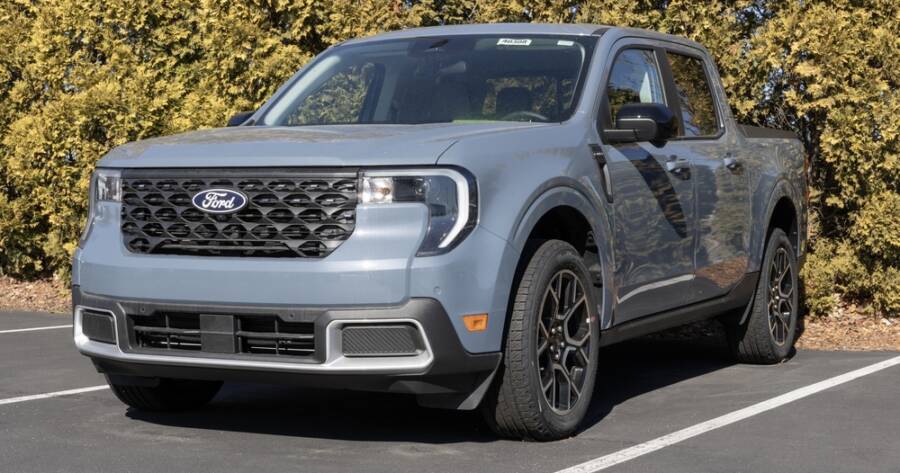
After years of bigger-is-better thinking dominating American roads, compact pickup trucks are staging a dramatic comeback. The reasons behind their return reveal something fundamental about what drivers actually want from a vehicle.
The Rise, Fall, and Return of the Small Truck
Compact pickup trucks were once fixtures of American life. During the 1970s and into the 1980s, models like the Toyota Pickup, Datsun 620, Ford Ranger, and Chevrolet S-10 became mainstays on highways and job sites across the country (source). They were practical, affordable, and easy to park — qualities that resonated with a wide range of buyers from tradespeople to college students.
Then they began disappearing. Regulatory pressures around fuel economy and emissions standards made it more financially attractive for automakers to invest in larger truck platforms, gradually pushing compact models out of the lineup (source). For roughly two decades, American consumers were left to choose between massive full-size trucks and passenger cars, with very little in between. Manufacturers appeared to operate under the assumption that bigger trucks meant bigger profits — and for a long time, they weren’t wrong.
But the market eventually signaled something different. Not every driver needs a six-thousand-pound truck loaded with premium features and a payment plan that rivals monthly rent, suggesting automakers may have misjudged a significant portion of their potential buyers for years (source). The segment’s revival wasn’t just possible — it was overdue.
A New Model Changes Everything
The pivot point came in 2021, when Ford introduced the Maverick. Built on a car-derived platform rather than the traditional truck-based body-on-frame architecture, it delivered genuine hauling capability alongside strong fuel economy and an accessible price tag that caught the attention of younger buyers who had been priced out of the truck market entirely (source). Almost immediately, demand exceeded expectations.
Sales numbers have since told a compelling story. The Ford Maverick moved roughly 155,000 units in 2025, a staggering leap from just 12,800 in its debut year, positioning it as the second best-selling compact or mid-size pickup in the entire country (source). The Toyota Tacoma continues to lead the segment with over 274,000 units sold in 2025, while the Chevrolet Colorado rounds out the top three at approximately 108,000 units (source). These are not niche numbers — they represent a genuine market force reshaping how automakers allocate development resources.
Hyundai entered the conversation around the same time with the Santa Cruz, a vehicle that blends crossover styling with open-bed utility. When consumers were shown images of both models with branding removed, the Maverick earned the highest appeal rating at 51%, with the Santa Cruz close behind at 42% (source). The appetite was clearly there — it simply needed a trigger.
What Buyers Actually Want
Consumer research has helped clarify exactly why compact trucks are resonating so strongly right now. Cargo space ranks as the single most important factor for buyers who would consider a compact truck over a traditional SUV, cited by 40% of respondents in one study, followed by fuel efficiency at 29% and price at 27% (source). Together, these three priorities paint a portrait of a practical, value-conscious buyer who wants genuine utility without excess.
This stands in contrast to the direction the broader truck market traveled for years, where increasing size, horsepower, and luxury content became the dominant product strategy. Full-size trucks remain hugely popular — total pickup sales across all segments reached approximately three million units in 2025, with projections pointing toward 3.1 million in 2026 (source). But within that broader success, consumers are increasingly making room for a different kind of truck.
The broader light truck category has also expanded its dominance in the American market, with 3.7 light trucks sold for every passenger car in 2023, up from a ratio of 2.5 in 2019 (source). That cultural shift toward truck ownership has created a favorable environment for compact models to find their footing, since buyers who might once have defaulted to sedans are now open to truck-based alternatives.
The Awareness Gap Still Closing
Despite the momentum, compact trucks face an ongoing challenge around consumer awareness. Research conducted around the segment’s relaunch found that only 31% of consumers knew compact trucks were entering the market, and just around 20% indicated they might consider purchasing one (source). That gap between potential demand and actual awareness represents both a challenge for manufacturers and an opportunity for the segment as a whole.
As more buyers discover that smaller trucks can deliver the open cargo bed, towing capability, and driving flexibility they need — without the size, cost, and fuel consumption of a full-size model — that awareness gap continues to narrow. Word-of-mouth, strong owner satisfaction, and expanding dealer inventory are all working together to bring more drivers into the compact truck conversation.
The segment’s trajectory also reflects a broader philosophical shift in how Americans relate to their vehicles. For a generation of urban and suburban drivers who want something genuinely useful but not overwhelming, compact pickups offer a compelling middle path that neither SUVs nor full-size trucks have been able to fully occupy.
Learn More About Today’s Compact Pickup Market
The compact pickup story is still being written. With sales figures climbing sharply, new models entering the segment, and consumer preferences continuing to shift toward practicality and efficiency, this corner of the truck market has become one of the most dynamic in the automotive industry. Buyers who understand what today’s smaller trucks actually deliver — in terms of cargo capability, fuel economy, and value — are better positioned to make smart vehicle decisions.
The data is clear: compact trucks are no longer a niche product or a nostalgic throwback. They have earned a permanent place in the American pickup landscape, and their influence on how automakers think about design and pricing is only growing stronger.