

Several major restaurant chains are closing locations across the United States in 2026, affecting everything from fast-food favorites to established casual dining brands. While some companies are permanently shutting down, others are reducing their restaurant networks to improve profitability. The closures reflect changing customer spending habits, financial pressures, and corporate restructuring efforts, with hundreds of restaurants affected nationwide.
Wendy’s Plans Hundreds of Restaurant Closures
Wendy’s is among the largest restaurant chains reducing its U.S. footprint in 2026. The company announced plans to close approximately 5% to 6% of its domestic restaurants during the first half of the year, representing an estimated 298 to 358 locations (source). The closures primarily target underperforming restaurants that have struggled to maintain satisfactory sales and profitability.
The decision follows disappointing financial performance, including an 8.3% decline in global sales during the fourth quarter of 2025 (source). Rather than abandoning its broader growth ambitions, Wendy’s is concentrating resources on stronger locations while continuing to pursue expansion opportunities. The strategy illustrates how even major fast-food brands are reconsidering which restaurants remain financially sustainable.
Pizza Hut and Papa John’s Reduce Their Networks
Pizza Hut announced plans to close approximately 250 underperforming U.S. restaurants during the first half of 2026. The closures were introduced through a turnaround initiative called “Hut Forward,” which also emphasized technology improvements, marketing, and changes to franchise operations. The announcement followed a 5% decline in U.S. same-store sales during 2025 (source).
The pizza chain subsequently underwent a major ownership change. On September 1, 2026, its former parent completed the sale of Pizza Hut’s business outside mainland China to LongRange Capital (source). The transaction represents another significant development as the brand works to improve its competitive position.
Papa John’s is also restructuring its restaurant network. The company expected approximately 200 North American restaurant closures during 2026 as part of a broader transformation plan. Its first-quarter financial report confirmed that 44 North American restaurants had already closed during that period (source). The initiative focuses on locations with weak financial performance while directing investment toward more sustainable operations.
Jack in the Box Continues Its Restructuring
Jack in the Box has also been closing restaurants through its “JACK on Track” turnaround program. Although an earlier restructuring announcement involved approximately 150 to 200 underperforming restaurants over multiple periods, updated company guidance in August projected approximately 50 to 60 closures during fiscal 2026 (source).
The revised projection is important because it distinguishes the larger multiyear restructuring effort from the number of restaurants expected to close during the current fiscal year. The company also planned approximately 25 new restaurant openings, demonstrating that its strategy combines selective closures with continued investment in other locations (source).
Smokey Bones and Bahama Breeze Face More Dramatic Changes
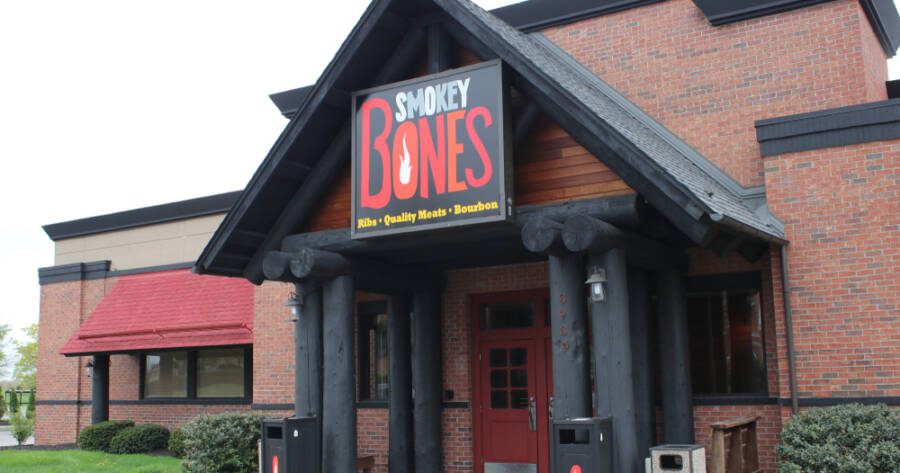
Some chains have experienced more severe consequences than selective restaurant closures. Smokey Bones, the barbecue restaurant brand, permanently ceased operations nationwide on April 28, 2026 (source). The shutdown followed financial difficulties involving its parent company and marked the end of the chain’s remaining restaurant operations.
Bahama Breeze faced a different outcome. Its parent company announced plans in February 2026 to permanently close 14 of the chain’s 28 restaurants and convert the remaining 14 into other restaurant brands (source). The permanent closures were completed around April 5, while the conversions were scheduled to take place over approximately 12 to 18 months.
Unlike restaurant chains seeking to improve performance through a smaller footprint, Bahama Breeze is being phased out as a distinct restaurant concept.
Outback Steakhouse Also Reduces Locations
Outback Steakhouse is another established casual dining brand experiencing closures during 2026. Its restaurant network contracted during the first half of the year, although the changes were smaller than those announced by several major fast-food competitors.
During the first quarter, five U.S. Outback locations closed. Another four closed during the second quarter, when one new restaurant also opened. The chain finished June with 659 U.S. locations, compared with 666 at the end of 2025 (source).
These figures illustrate why announced closures and actual changes in restaurant counts should be distinguished. New openings can partially offset closures, while financial reports may cover different periods.
Why Restaurant Chains Are Closing Locations
The reasons behind these developments differ. Some brands face declining customer traffic and sales, while others are restructuring franchise networks or withdrawing from restaurant concepts that no longer align with corporate priorities. Rising operating expenses and intense competition can further complicate efforts to maintain profitable locations.
Importantly, closing underperforming restaurants does not necessarily mean a chain is approaching bankruptcy. Wendy’s, Pizza Hut, Papa John’s, and Jack in the Box have pursued restructuring strategies while continuing other business activities. Smokey Bones represents the more extreme situation of a complete nationwide shutdown.
What These Closures Mean for American Diners
Restaurant closures in 2026 are reshaping familiar dining options in communities across the United States. For customers, they can mean losing convenient locations or longstanding neighborhood favorites. Employees and franchise operators may face more immediate financial consequences.
The developments also demonstrate that major restaurant brands are taking different approaches to financial challenges. Some are closing selected locations to strengthen their remaining businesses, while others are undergoing ownership changes, brand conversions, or complete shutdowns. Understanding these distinctions provides a clearer picture of how the American restaurant industry is changing.