

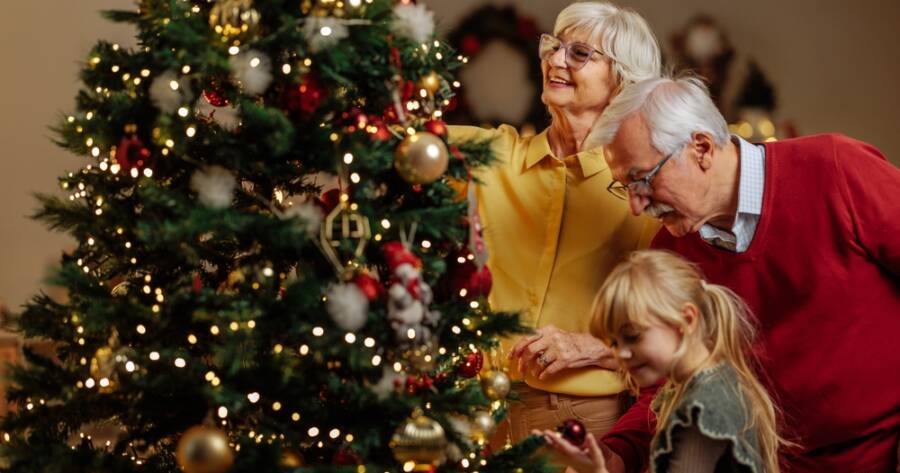
When grandparents reach for their wallets each holiday season, the question of what to give grandchildren can feel both exciting and overwhelming. The most memorable gifts are not always found in a toy store, and many families are learning that meaningful alternatives can leave a far deeper impression.
Why Traditional Toy Gifts Often Fall Short
Grandparents have long been known for their generosity at Christmas, but parents across the country are noticing a growing problem with the sheer volume of toys arriving under the tree. Polling among parents has revealed that over-gifting creates real household tension, ranging from children who fail to appreciate what they receive to friction between co-parents about space, spending, and values (source). Toys that excite for an afternoon often end up forgotten in a closet by February.
This pattern has prompted many grandparents to rethink their approach entirely. Rather than contributing to a growing pile of items, a growing number are choosing gifts that connect, teach, or create lasting memories. Experts in child development and family relationship research have noted that the time and experiences grandparents share with grandchildren rank among the most impactful contributions they can make to a child’s growth (source).
Experiences That Bring Generations Together
One of the most widely recommended alternatives to physical toys is the experiential gift. Rather than wrapping a box, grandparents can give the promise of shared time — whether that means attending a pottery class together, visiting a local zoo, or planning a dedicated trip for quality time away from the usual routine (source). These outings shift the focus from ownership to memory-making, which researchers and family experts consistently highlight as more developmentally meaningful for children.
Annual membership passes to museums, aquariums, theme parks, sports venues, or performing arts theaters represent another popular approach. Rather than a one-time visit, a yearly pass allows grandparents and grandchildren to enjoy multiple spontaneous outings throughout the calendar year, weaving connection into ordinary weekends rather than limiting it to a single holiday event (source). This type of gift also grows naturally alongside a child’s evolving interests.
Utah State University extension experts point to a concept informally known as “Grandma Camp” as a particularly powerful version of an experiential gift. Dedicating a stretch of time exclusively to a grandchild — filled with activities chosen together — produces lasting memories that no toy can replicate (source).
Skill-Sharing as a Gift With Lifelong Value
Grandparents hold a unique position in a child’s life: they carry decades of practical wisdom and lived knowledge that younger generations rarely encounter elsewhere. Channeling that into a holiday gift means offering to teach something — whether cooking a family recipe, planting and tending a garden, learning a traditional craft, or picking up a new creative skill together (source). These skill-sharing experiences do double duty, building genuine competence in a child while simultaneously deepening the intergenerational bond.
Unlike a toy that becomes obsolete, a skill stays with a child for life. A grandchild who learns to bake a pie with their grandmother or build a birdhouse with their grandfather carries both the skill and the memory of who taught it to them into adulthood. This kind of gift is impossible to replicate with a store purchase.
Keepsakes and Financial Gifts That Last
Beyond experiences and skills, grandparents also have the opportunity to give gifts with deep emotional or long-term financial significance. Keepsake items that preserve family history — handwritten letters, curated photo collections, recorded storytelling, or heirloom objects tied to family narrative — carry emotional weight that outlasts any commercial product (source). Children who receive these items often treasure them more as they grow older and begin to value their own family identity.
On the financial side, opening or contributing to a savings account on behalf of a grandchild doubles as both a generous gesture and a teachable moment. Grandparents who take this approach give something tangible that will grow over time, while also introducing children to the concept of saving and financial responsibility at an early age (source). When paired with an age-appropriate conversation about how savings accounts work, the gift becomes an educational experience as well.
Matching the Gift to the Child
No single approach works for every grandchild, and the most thoughtful grandparents take the time to consider what will resonate with a particular child’s personality, interests, and stage of development. A curious eight-year-old with a love of science might light up at a natural history museum membership, while a teenager who loves cooking might treasure a dedicated day in the kitchen learning a grandparent’s signature dish. Personalizing the gift signals genuine attention and care, which itself communicates something powerful to a child.
Family coordination matters here as well. When grandparents communicate openly with parents about what kinds of gifts align with the family’s values and the child’s current interests, the result tends to benefit everyone. The child receives something genuinely fitting, parents avoid household clutter, and grandparents feel confident their gift will be appreciated rather than set aside.
Learn More About Meaningful Gifts From Grandparents
The shift away from toys toward experiences, skills, keepsakes, and financial contributions reflects a broader understanding of what children truly benefit from during their formative years. Grandparents who explore these alternatives often find that the gifts they give become defining memories in a grandchild’s story. Research and family experts consistently support the idea that shared time and intentional connection are among the most valuable things one generation can offer another (source).
Families who take the time to think beyond the toy aisle tend to find that the holiday season becomes less about accumulation and more about the relationships that make it meaningful. Exploring the full range of options available — from experience-based gifts to skill-sharing traditions — can help grandparents make choices that resonate for years to come.