

Tucked away in dresser drawers and old jewelry boxes across America, certain vintage timepieces from the 1960s have quietly become some of the most sought-after collectibles on the secondary market. Knowing which models matter most can make all the difference when looking for investment potential in vintage watches.
Why 1960s Watches Attract Serious Collectors
The 1960s represented a pivotal era in watchmaking. Manufacturers were racing to push technical boundaries, producing movements and designs that remain celebrated decades later. That combination of mechanical ambition and distinctive mid-century aesthetics gave birth to a handful of references that collectors now treat as blue-chip assets. Unlike modern luxury watches, many of these pieces were purchased, worn briefly, and then set aside — meaning genuine examples occasionally surface in estate sales or family belongings in surprisingly intact condition.
What separates a truly collectible 1960s watch from an ordinary vintage timepiece comes down to several factors: movement innovation, dial rarity, provenance, and overall condition. Certain references also carry cultural weight tied to historical moments, which adds another layer of desirability that purely technical achievements cannot replicate.
The Rolex References That Command Premium Prices
Among the most recognizable names in vintage collecting, Rolex produced several 1960s references that consistently attract strong interest. The GMT-Master reference 1675, with its iconic red and blue “Pepsi” bezel, was designed for professional use and has since become a staple of serious collections. Depending on metal finish, year of production, and overall condition, examples change hands for anywhere between $10,000 and $35,000 (source).
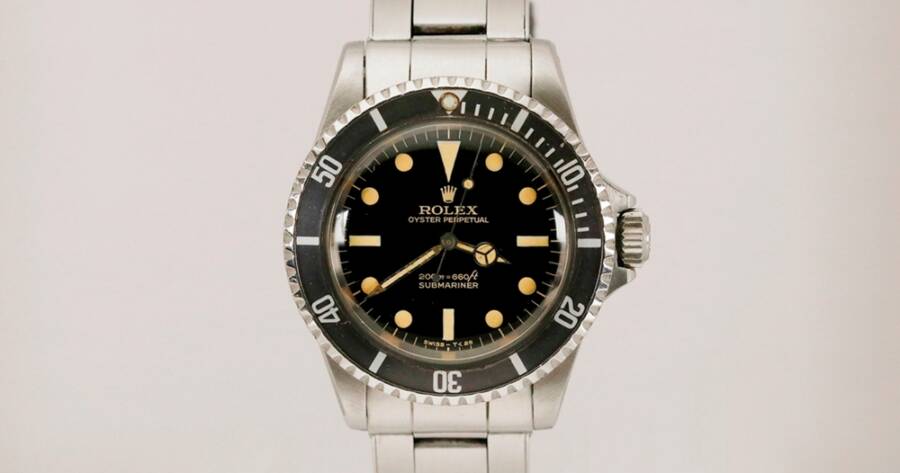
The Submariner reference 1680 holds a notable distinction as the first Submariner model to incorporate a date display on its dial. That single design choice elevated its collectibility significantly, with prices on the secondary market typically landing between $10,000 and $40,000 depending on rarity and condition (source). The Explorer reference 1016, produced beginning in 1963, is another quietly powerful entry — commonly found around $14,000, though unusual dial variants can push that figure considerably higher (source).
Perhaps no Rolex from this period carries more legend than the Daytona known as the “Paul Newman.” First produced in 1965, this chronograph featured what collectors call “exotic dials,” distinguished by unusual graphic layouts and contrasting sub-registers. Its reference numbers — 6239, 6241, 6265, and 6263 — are among the most recognized in the entire world of vintage watches, cementing its reputation as one of the most collectible timepieces ever produced (source).
Space-Age Icons From Omega
Omega’s Speedmaster reference 105.003, known informally as the “Ed White,” earned its place in history as the exact model certified by NASA and worn during the first American spacewalk. That direct connection to the space program gives this reference an enduring cultural significance that mechanical specifications alone cannot provide. Collectors can currently find authenticated examples in the $10,000 to $15,000 range (source), making it one of the more accessible historically significant pieces from this decade.
Chronograph Milestones From Seiko and Zenith
Outside the Swiss luxury tier, several brands produced references in the 1960s that have earned genuine respect among knowledgeable collectors. Seiko introduced the 6139 in early 1969, a 40mm steel-cased chronograph that incorporated a vertical clutch and column wheel mechanism. It is widely recognized as the first mass-produced automatic chronograph in the world — a technical achievement that gives it a firm place in horological history despite its relatively approachable price point today (source).
On January 10, 1969, Zenith announced the El Primero movement, which operates at 36,000 vibrations per hour. This high-frequency caliber is considered the first fully integrated automatic chronograph movement, and its technical sophistication has kept the El Primero at the center of collector conversations for more than fifty years (source).
Underrated References Worth a Closer Look
Not every desirable 1960s watch carries a headline price. The Enicar Sherpa Guide 600, a 40mm timepiece with a stylish and period-correct design sensibility, represents an entry point into the world of vintage collecting without demanding an outsized financial commitment. Depending on condition, examples are typically listed between approximately $1,500 and $3,000 (source). For collectors building a diverse portfolio or simply exploring what the era produced, this kind of reference offers genuine vintage character at a reasonable cost.
Condition plays a defining role across all of these models. Original dials, unpolished cases, and matching-era bracelets significantly affect both value and authenticity assessments. A watch that appears modest on the surface can reveal tremendous significance once its reference number and dial configuration are properly identified.
Why You Should Learn More About Valuable 1960s Watches
The market for 1960s timepieces continues to attract both seasoned collectors and first-time buyers who discover that a family heirloom holds unexpected value. From technical firsts like the Seiko 6139 and Zenith El Primero to cultural icons like the Omega Ed White Speedmaster and the Paul Newman Daytona, these watches represent a decade of extraordinary watchmaking.
Understanding the specific references, dial variations, and condition factors that drive value helps anyone assess what they might already have — or what they should consider adding to a collection. The more one learns about this particular era, the clearer it becomes why these timepieces have maintained and grown their appeal across generations.