

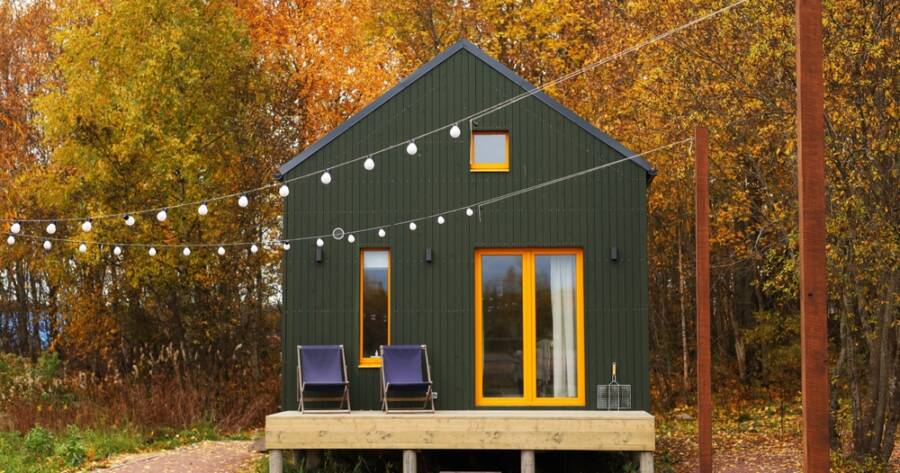
Backyard apartments offer homeowners new opportunities to generate rental income, accommodate family members, and make better use of their property. As interest in accessory dwelling units grows in 2026, understanding construction costs, zoning regulations, financing options, and permit requirements is essential. Knowing what to expect can help homeowners plan successful projects and avoid costly mistakes.
What Is a Backyard Apartment?
A backyard apartment is a self-contained residential unit built on the same lot as an existing primary home. These compact homes go by many names depending on the region, including granny flats, in-law units, backyard cottages, and secondary units (source). The official term used in housing law and planning documents is Accessory Dwelling Unit, commonly shortened to ADU.
These units are fully functional living spaces, typically equipped with a kitchen, bathroom, and sleeping area. They can be attached to the main residence, built as a conversion of an existing structure like a garage, or constructed as a completely freestanding building in the backyard. Each configuration has its own set of considerations regarding cost, construction timeline, and local permitting rules.
Why Backyard Apartments Are Getting So Much Attention in 2026
Housing availability has become a pressing issue across much of the United States, and backyard apartments have emerged as one practical response. State and local governments increasingly view ADUs as an innovative way to expand housing supply without requiring large-scale development (source). Rather than building new neighborhoods from scratch, ADUs allow individual homeowners to contribute to local housing inventory using land they already own.
As of recent years, 18 states have passed legislation broadly permitting homeowners to build and rent out accessory dwelling units, with 11 of those states enacting laws within just the past four years (source). This legislative momentum signals a nationwide shift in how policymakers are approaching housing reform, making 2026 an especially significant moment for homeowners considering this type of project.
How Backyard Apartments Actually Work
Once built, a backyard apartment functions as an independent dwelling. The occupant, whether a family member, long-term renter, or short-term tenant, has their own private entrance and all the basic amenities needed for daily living. Utilities can be shared with the main house or set up as separate connections depending on the design and local requirements.
From a property ownership standpoint, the ADU belongs to the homeowner along with the primary residence. It cannot be sold separately in most jurisdictions, though it can generate rental income. Homeowners who already have an ADU on their property or who plan to add one may also find it easier to qualify for certain financing products. For example, borrowers with an existing ADU can apply up to 75% of the estimated rental income toward qualifying for an FHA-insured mortgage (source). For those planning to add an ADU through renovation financing, up to 50% of the projected rental income can count when applying under FHA’s Standard 203(k) Rehabilitation Mortgage Insurance Program (source).
How Much Does a Backyard Apartment Cost in 2026?
Building a backyard apartment requires a substantial investment, with expenses varying according to location, size, construction method, and interior finishes. According to a September 2026 cost guide, a newly constructed detached accessory dwelling unit typically costs between $110,000 and $285,000, excluding certain permits and additional fees (source). Converting an existing garage into an ADU generally costs between $60,000 and $150,000. Across ADU types, the reported national average is approximately $180,000 (source).
Homeowners should budget for more than the building itself. Architectural plans, site preparation, foundations, utility connections, permits, and landscaping can all affect the final expense. For example, the same cost guide estimates building permit fees of approximately $1,350 to $9,000, depending on location. Before committing to a project, homeowners should request itemized estimates from local contractors and establish a contingency budget for unexpected site conditions or construction complications.
How to Get a Backyard Apartment Approved and Built
The process begins with confirming that an accessory dwelling unit is permitted on the property. Homeowners should contact their local planning or building department to review zoning restrictions, minimum setbacks, maximum building size, height limits, and utility requirements. Once eligibility is established, the next step is preparing architectural drawings and a site plan showing the proposed structure’s location. Building permit applications may also require structural documentation and separate electrical, plumbing, or mechanical permits, depending on local regulations (source).
After submitting the application, homeowners must complete the necessary plan reviews and address any requested corrections before construction can begin. With permits approved, the building process generally involves site preparation, foundation work, framing, roofing, utility installation, and interior finishing. Inspections take place at required stages, with final approval necessary before the project is considered complete (source). Although the exact procedures differ by jurisdiction, reviewing requirements early and working with professionals familiar with local ADU regulations can help avoid preventable delays.
Key Hurdles Homeowners Should Know About
Despite growing support for ADUs, building one is not always straightforward. Three regulatory obstacles frequently slow down or derail projects: owner-occupancy requirements, parking mandates, and discretionary permit review processes (source). Owner-occupancy rules require the homeowner to live on the property, either in the main house or the ADU, which limits investment strategies. Parking requirements can demand that additional off-street spaces be created alongside any new unit, adding cost and complexity, particularly on smaller lots.
Discretionary permit review is perhaps the most unpredictable hurdle. Unlike standard building permits that are approved once the plans meet code, discretionary review allows local officials or community boards to approve or deny a project based on subjective criteria. This process introduces uncertainty about timelines and final approval, making early research into local ordinances especially important for any homeowner planning a backyard apartment project.
State governments have stepped in to limit some of these obstacles. California’s Department of Housing and Community Development, for instance, actively oversees local ADU ordinances to ensure cities and counties do not impose restrictions that go beyond what state law allows (source). This kind of state-level oversight has grown alongside the surge in homeowner interest in ADUs as a tool for creating more affordable housing options.
Junior ADUs: A Smaller but Significant Option
Beyond standard backyard apartments, homeowners should also be aware of Junior Accessory Dwelling Units, or JADUs. These are smaller units, typically carved out of existing space within the primary residence, such as a converted bedroom with its own exterior entrance and kitchenette. JADUs face their own set of rules distinct from full ADUs, and understanding the difference helps homeowners make better decisions about which type of unit best suits their property and goals.
Both ADUs and JADUs have gained recognition as effective tools for increasing housing supply at the local level without requiring the homeowner to subdivide or sell their land (source). For multigenerational families in particular, JADUs offer a way to house a family member nearby while maintaining a degree of separation and privacy.
Why You Should Learn More About Backyard Apartments
Backyard apartments sit at the intersection of housing policy, personal finance, and real estate strategy. The regulatory landscape has shifted meaningfully in recent years, and homeowners who take the time to understand ADU rules in their state and municipality are better positioned to act when the moment is right.
Whether the goal is generating rental income, housing a family member, or simply adding long-term value to a property, backyard apartments present a compelling option worth exploring thoroughly. Staying informed about evolving local ordinances, financing tools, and building requirements ensures homeowners can make confident, well-prepared decisions.