

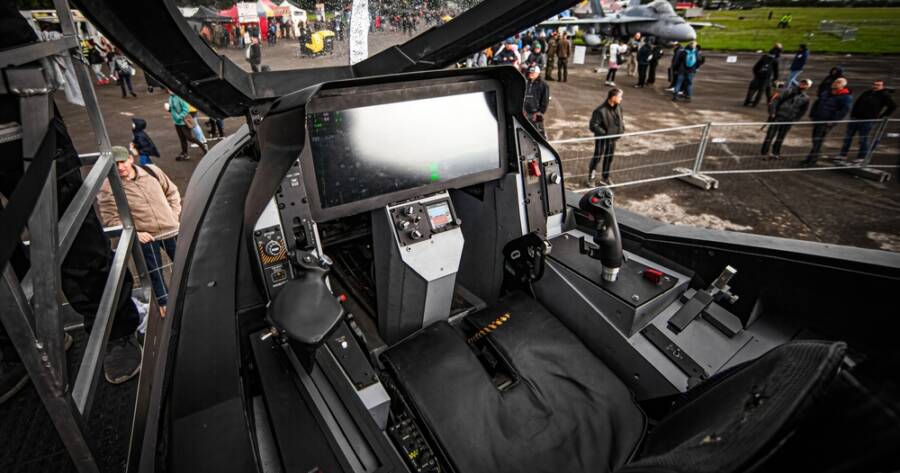
Modern fighter jet cockpits look remarkably different from those of earlier generations. Traditional gauges and switches have increasingly given way to digital screens, helmet-mounted displays, and sophisticated computer systems that organize information for pilots. Aircraft such as the F-35 Lightning II, F-16 Block 70/72, and F-15EX demonstrate how key technologies are changing flight operations, improving situational awareness, and helping pilots manage complex missions.
From Traditional Instruments to Digital Cockpits
Older fighter aircraft relied on numerous individual instruments to display airspeed, altitude, engine performance, navigation information, and weapons status. Pilots had to monitor these systems while maintaining awareness of their surroundings, often under demanding conditions. Modern glass cockpits simplify this process by presenting information through electronic displays that can be configured for different tasks.
The F-15EX Eagle II illustrates this evolution. Its cockpit incorporates digital fly-by-wire flight controls, glass displays, and modern mission systems, allowing pilots to access information through a more integrated interface (source). These improvements help reduce the need to monitor numerous separate instruments while providing flexibility for future technology upgrades.
The F-35’s Panoramic Touchscreen
One of the most distinctive features of the F-35 cockpit is its large panoramic touchscreen. Measuring approximately 20 inches wide and 8 inches tall, the display consolidates flight information, navigation details, aircraft systems, and mission-related data into a centralized interface (source). The cockpit also incorporates speech-recognition technology, giving pilots another way to interact with selected aircraft functions.
Unlike conventional instrument panels, the F-35’s digital interface can present different information according to operational needs. Pilots can monitor aircraft performance while reviewing navigation maps, sensor information, and other relevant data. This arrangement reduces dependence on numerous dedicated gauges and makes the cockpit more adaptable to different mission requirements.
Helmet-Mounted Displays Change What Pilots See
Head-up displays, commonly called HUDs, allow pilots to view essential flight information without repeatedly looking down at their instruments. Traditional systems project symbols onto a transparent display positioned directly in front of the pilot.
The F-35 takes a different approach by replacing the conventional fixed HUD with a helmet-mounted display. Flight information and targeting symbols appear on the pilot’s visor, remaining available as the pilot turns their head. Six infrared cameras positioned around the aircraft also provide imagery that can be displayed through the helmet, helping pilots observe areas outside their direct line of sight (source).
This system is particularly valuable when pilots need to maintain awareness of aircraft surroundings while maneuvering. However, the imagery depends on onboard sensors and operating conditions rather than providing unrestricted visibility in every situation.
Modern Flight Controls and Hands-On Operation
Despite increasingly sophisticated screens, physical flight controls remain essential. Many fighters use a hands-on-throttle-and-stick arrangement, commonly known as HOTAS. This places frequently used controls within reach of the pilot’s hands, allowing selected navigation, sensor, and weapons functions to be managed without constant movement between separate cockpit panels.
Modern aircraft also incorporate computerized flight-control systems. In the F-15EX, digital fly-by-wire technology translates pilot inputs into electronic commands, supporting precise aircraft control. The combination of physical controls and digital interfaces allows pilots to operate advanced systems while maintaining attention on flying the aircraft.
Sensor Fusion Creates a Clearer Tactical Picture
Modern fighter pilots must interpret information from radar, infrared sensors, electronic warfare systems, and communications networks. In older aircraft, much of this information appeared on separate displays, requiring pilots to combine the details mentally.
The F-35 uses sensor fusion to integrate information from multiple onboard systems into a more coherent tactical picture. Its equipment includes active electronically scanned array radar, infrared sensors, and electronic warfare capabilities. Computer processing helps organize these inputs so pilots can recognize potential threats and better understand the surrounding operational environment (source).
This integration does not eliminate the need for pilot judgment. Instead, it helps reduce the workload associated with interpreting separate sources of information during demanding missions.
The F-16 Block 70/72 Shows How Older Designs Evolve
Advanced cockpit technology is not limited to newly developed fighter aircraft. The F-16 Block 70/72 demonstrates how an established aircraft design can incorporate modern digital systems.
Its upgraded cockpit features a high-resolution Center Pedestal Display that presents moving maps, tactical imagery, flight instruments, and targeting information. Pilots can enlarge selected information and move content between displays, helping them organize data according to mission requirements (source).
The aircraft also incorporates modern radar technology and updated avionics. These improvements show how cockpit modernization can extend the capabilities of aircraft families that have been operating for decades.
The Future of Fighter Cockpit Technology
The next stage of cockpit development is likely to emphasize closer cooperation between piloted aircraft, unmanned systems, and connected military platforms. Advanced computers, artificial intelligence, and improved communication networks could help pilots manage increasingly complicated missions.
The F-15EX, for example, has been designed with an adaptable digital architecture that supports future upgrades and potential cooperation with unmanned aircraft. Such developments could eventually allow pilots to coordinate information from several platforms through increasingly integrated cockpit interfaces (source).
Why Modern Fighter Cockpits Matter
Modern fighter cockpit technology is designed to make complex aircraft easier to manage while improving pilots’ access to critical information. Large digital displays, helmet-mounted systems, advanced flight controls, and sensor fusion each contribute to that goal.
The F-35, F-16 Block 70/72, and F-15EX demonstrate different approaches to achieving greater cockpit integration. As these technologies continue to develop, fighter pilots will increasingly depend on interfaces that organize information efficiently, support faster decisions, and help them remain focused on their missions.