

The 1970s produced far more memorable cars than the handful of muscle machines and exotic icons that usually dominate nostalgia. American automakers experimented with downsizing, luxury, and unconventional styling, while European and Japanese brands introduced equally unusual ideas. Many models sold well or broke new ground before fading from everyday conversation, leaving behind a surprisingly varied group of overlooked classics.
When Detroit Got Weird: Overlooked American Classics
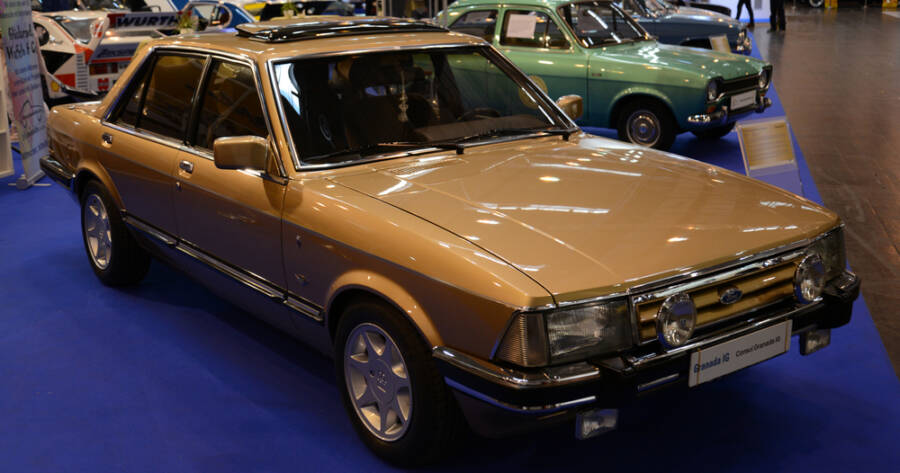
Not every car that rolled out of an American factory in the seventies earned a spot in the history books, but that does not mean they were undeserving of attention. The Ford Granada is a perfect example of a car that moved in enormous numbers yet rarely surfaces in nostalgic conversation today. Ford sold nearly 1.8 million examples of the Granada between 1975 and 1980, with advertisements boldly comparing it to the Mercedes-Benz 280 (source). Despite that sales success, the Granada has been almost entirely erased from popular memory.
The Dodge Magnum tells a similar story. Built on a mid-size platform that dated back to the early 1960s, the 1978 Magnum was one of the final Chrysler passenger vehicles to carry a big-block engine, specifically a 400-cubic-inch V-8 displacing 6.6 liters (source). It represented the last gasp of an era when raw displacement was still a selling point, yet it receives a fraction of the recognition given to its Dodge siblings.
Then there is the GMC Caballero, arguably the only car-like vehicle that GMC ever sold on the American market. It was essentially a rebadged Chevrolet El Camino, but GMC distinguished it with its own trim variations, including a performance package featuring a 350 V8 engine called the Diablo, offered in 1978 (source). The Caballero remains one of the most overlooked car-truck hybrids of the decade.
The AMC Cars That Quietly Changed Everything
American Motors Corporation spent much of the seventies flying under the radar, yet some of its vehicles carried enormous historical significance. The AMC Hornet was later transformed into the 1978 Concord before being combined with four-wheel-drive Jeep components to create the AMC Eagle, which stands as a 25-years-too-early forerunner of the modern crossover SUV (source). In other words, a forgotten AMC product helped invent the vehicle category that now dominates global auto sales.
The Ford Torino and its upscale counterpart, the Gran Torino, occupied an interesting space in the Ford lineup as intermediate models that could be ordered as anything from a sporty coupe to a wood-paneled family wagon. The Gran Torino earned pop culture fame through the television series Starsky and Hutch, yet the broader Torino family has faded from everyday automotive conversation (source).
European Oddities and Exotic Curios
The decade was not just an American story. Europe produced several vehicles during the seventies that have since become almost invisible in mainstream car culture. The Alfa Romeo Montreal debuted its bodywork at the Geneva motor show in 1970, with design credited to Marcello Gandini of Bertone. It featured a detuned 200-horsepower V8, making it one of only three postwar V8 Alfa Romeos ever produced, yet total production reached only around 3,000 units (source). Rarity and beauty combined should have guaranteed lasting fame, yet the Montreal remains largely unknown outside dedicated enthusiast circles.
At the opposite end of the spectrum sat the Bond Bug, a peculiar three-wheeled vehicle built in the United Kingdom until 1974. A product of the merger between Bond and Reliant, it came exclusively in a shade described as Tangerine Orange and featured a distinctive wedge shape, targeting younger buyers who wanted something genuinely different (source). Few vehicles from any era match the Bond Bug for sheer peculiarity.
The Mercedes-Benz 450SEL 6.9 deserves a mention as a forgotten powerhouse. It swapped out a smaller 4.5-liter V8 for a 6.9-liter unit producing 282 horsepower and 410 lb-ft of torque, and its price tag at the time came close to matching that of a Rolls-Royce in the United States (source). Despite that extraordinary specification, it rarely appears on lists of the great seventies luxury vehicles.
The Sports Cars That Defined a Radical Era
Some of the decade’s most remarkable sports cars have maintained cult followings, but even among enthusiasts, certain machines get overlooked. The Jaguar XJ-S arrived in 1975 carrying stunning coachwork and a magnificent V-12 engine under its hood. Reliability concerns caused significant depreciation over the years, which paradoxically makes the car more accessible today (source). A car this striking deserves far more recognition than it typically receives.
The Mazda RX-7, which first appeared at dealerships in 1978, built an enthusiastic following on the strength of its lightweight construction and the distinctive acoustic character of its rotary engine (source). Meanwhile, the Porsche 930, better known as the 911 Turbo, earned the nickname “the Widowmaker” because of its wider fenders, prominent rear wing, and a dangerous tendency toward snap-oversteer during hard cornering (source). Both cars capture the decade’s appetite for vehicles that balanced excitement with genuine risk.
Porsche also dominated Le Mans racing in the early seventies through its extraordinary 917 race car, a machine that spawned multiple variants and cemented its place as one of motorsport’s enduring icons (source). The 917 reminds enthusiasts that the seventies were not only about responding to a fuel crisis but also about pushing engineering to its absolute limits on the track.
Why You Should Learn More About Classic Cars From the Seventies Today
The seventies produced a far richer automotive landscape than most people recognize. From forgotten American muscle machines and unusual European three-wheelers to overlooked luxury sedans and revolutionary Japanese sports cars, the decade offered enormous variety. Many of these vehicles influenced future designs in ways that are only apparent in hindsight, such as how an underrated AMC product quietly predicted the modern crossover.
Studying these forgotten machines offers a deeper understanding of how the automotive world navigated economic pressure, shifting regulations, and evolving consumer tastes. Enthusiasts who dig beyond the familiar icons will find a decade packed with surprising engineering, bold aesthetics, and vehicles that deserve a second look.