

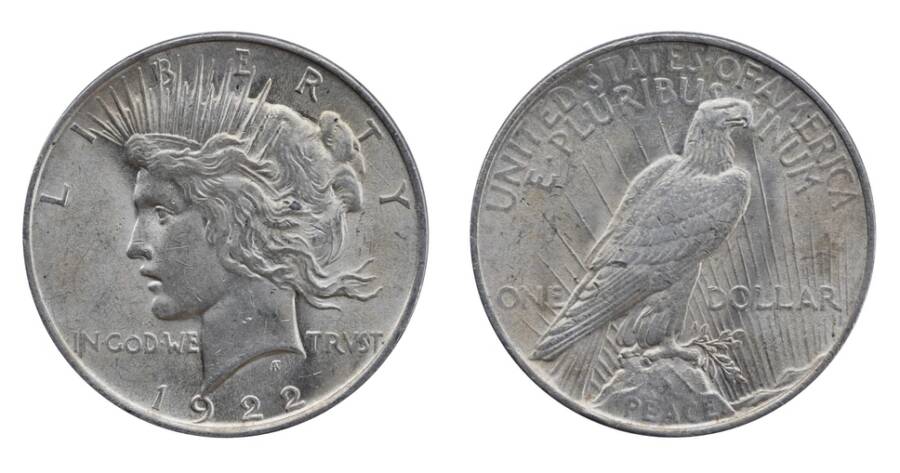
Silver dollars hold a special place in American numismatic history, and their worth goes far beyond face value. Understanding what drives their prices — from raw metal content to rare dates and collector demand — can make a significant difference when buying, selling, or simply taking stock of a collection.
The Silver Inside Every Dollar Coin
Before exploring collector premiums and rare varieties, it helps to understand the baseline value that silver content provides. Morgan Dollars, struck from 1878 to 1921, and Peace Dollars, produced from 1921 to 1935, share the same composition: 90% silver, a total weight of 26.73 grams, and an actual silver weight of 0.7734 troy ounces (source). This means that at any given moment, those coins carry a floor value tied directly to the live silver spot price.
The American Silver Eagle, minted since 1986, takes things a step further. It is composed of 99.93% silver and contains exactly one full troy ounce of the metal, so its melt value equals the current silver spot price at all times (source). Tracking these melt values in real time is straightforward, as major grading services update their published figures approximately every 15 minutes during market hours (source).
Why Collector Value Often Surpasses Melt Value
Melt value is merely the starting point. A coin’s numismatic worth — the premium collectors are willing to pay above and beyond raw silver content — can dwarf the intrinsic metal value many times over (source). For silver dollar coins, this gap between melt value and collector value is often dramatic, driven by a combination of age, condition, mintmark, and overall scarcity.
Across the full spectrum of U.S. silver dollars, values range anywhere from around $15 all the way up to $10,000,000, covering nearly every price point depending on the specific type, date, and state of preservation (source). That enormous range reflects just how differently the market treats a common-date coin in average condition versus a pristine rarity from the 19th century.
Typical Silver Dollar Values at a Glance
For many common Morgan and Peace dollars, the silver content establishes an important baseline, but collector value can push the price higher depending on date, mintmark, and condition. In September 2026, NGC listed the melt value of a Peace Dollar at about $50, reflecting its 0.7734 troy ounces of silver (source). Common circulated examples may therefore trade relatively close to their bullion value, while better-preserved or scarcer coins can command significantly more.
NGC’s Peace Dollar price guide shows that values vary substantially by year, mintmark, and grade, which is why two coins with identical silver content can have very different market prices (source). Rather than relying on a single “average” value, owners should first identify the exact coin and then compare its condition with a current grading-service price guide.
How Date and Mintmark Shape What a Coin Is Worth
Two Morgan Dollars might look nearly identical to the untrained eye, yet carry vastly different market prices. The key differentiators are often the date and the tiny mintmark stamped on the coin. Mintmarks indicate which U.S. Mint facility struck a particular coin — Philadelphia, New Orleans, Carson City, Denver, or San Francisco — and certain facility-and-year combinations are far rarer than others (source).
Most Morgan and Peace dollars dated 1878 or later typically trade at only a modest premium above their silver bullion value unless they happen to feature a scarce date or achieve a high grade (source). However, coins from 1877 and earlier are a different story entirely. Dollar coins of that age carry inherent collector value regardless of condition and should never be evaluated purely on the basis of their metal content (source).
The Critical Role of Condition and Grading
Perhaps no single factor affects a silver dollar’s price more profoundly than its physical condition. The numismatic community uses a standardized grading scale to assess everything from heavy circulation wear to virtually perfect mint state surfaces. Even a modest improvement in grade can translate to a substantial jump in dollar value, particularly for desirable dates and mintmarks.
Small variations that might seem insignificant — a slightly different reverse design, a repunched mintmark, or a doubled die — can also make two otherwise similar coins worth dramatically different amounts (source). Serious collectors and professional appraisers examine coins under magnification specifically to identify these kinds of details before assigning a value.
Early American Silver Dollars and Their Special Status
The United States Mint began producing dollar-sized silver coins in 1794, and surviving examples from those earliest years are among the most historically significant American coins in existence. Because age alone guarantees collector interest for pre-1878 issues, these pieces command prices rooted in rarity and historical significance rather than spot silver prices.
The sheer breadth of silver dollar coinage history in the United States means that a family collection tucked away for decades could contain anything from common bullion-value coins to extraordinary rarities worth many thousands of dollars. Professional appraisal is typically the most reliable path to an accurate assessment for any coin that predates the late 19th century or appears to be in exceptional condition.
Putting It All Together When Evaluating Silver Dollars
Assessing what a silver dollar is worth requires looking at multiple factors simultaneously. The metal’s spot price establishes a floor, but condition, date, mintmark, variety, and overall collector demand all build on top of that foundation. A coin’s melt value and its market value can align closely for common bullion pieces, or they can diverge sharply for historic rarities and high-grade specimens.
Anyone holding silver dollars benefits from understanding both the metal market and the numismatic market. Selling a genuinely rare coin for scrap silver would mean leaving substantial money on the table, while overestimating the collector premium on a common-date piece could lead to unrealistic price expectations. Knowing how to distinguish between the two categories — and consulting authoritative price resources — helps ensure that silver dollars are properly valued in any transaction.
Why You Should Learn More About Silver Dollar Values
Silver dollars represent a unique intersection of precious metal investing and American historical collecting. Their worth spans a remarkable range, from modest bullion premiums on widely available examples to breathtaking sums for genuine rarities in exceptional condition. The factors that determine price — silver content, coin age, mintmark, grade, and variety — interact in ways that reward careful study.
Whether inherited, purchased, or discovered at an estate sale, silver dollars deserve thorough evaluation rather than a quick guess. Taking the time to understand coin grading standards, stay informed about live silver prices, and consult reputable numismatic references gives any owner a clearer, more accurate picture of true value.