

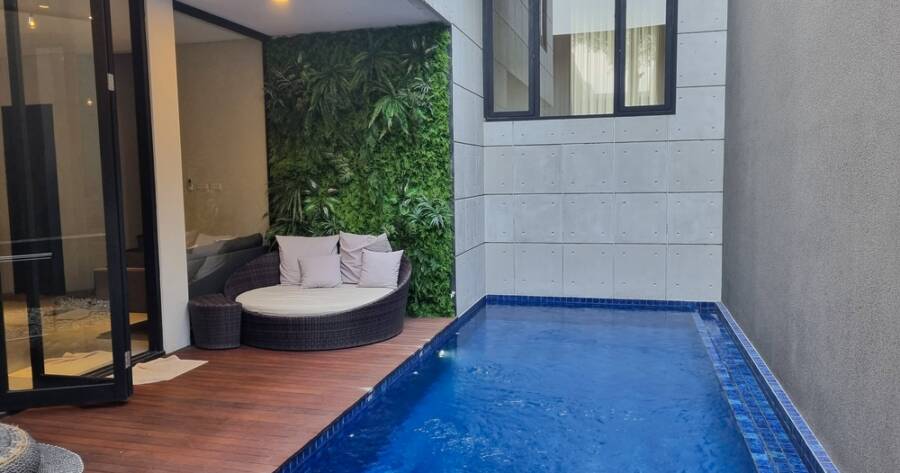
A full-size swimming pool can take up a large portion of a backyard and require a significant investment, making a smaller alternative appealing to many homeowners. Plunge pools offer compact dimensions, customizable features, and room for relaxation or light exercise. Understanding their layouts, installation costs, and everyday benefits can help determine whether one fits a property and budget.
What Is a Plunge Pool?
A plunge pool is a compact, purpose-built water feature designed to deliver relaxation, exercise, and visual appeal within a fraction of the space a traditional pool demands. These pools are typically rectangular and considerably smaller than conventional swimming pools, making them a practical solution for urban lots, narrow backyards, and properties where outdoor space is at a premium (source).
While terms like dipping pool and cocktail pool are sometimes used interchangeably with plunge pool, each describes a slightly different product. Plunge pools are generally deeper than cocktail pools and are often outfitted with water jets to create resistance for exercise and rehabilitation. A common small pool footprint measures roughly 10 feet by 16 feet, compared to a standard full-size swimming pool that typically spans closer to 16 by 38 feet (source).
Plunge Pool Design Options and Features
One of the strongest draws of a plunge pool is the flexibility it offers during the design phase. Homeowners can choose between in-ground, partially above-ground, or fully above-ground installations depending on their budget, property layout, and preferred aesthetic (source).
Beyond the basic shell, plunge pools can be personalized with a wide range of built-in features. Popular additions include integrated benches for seating inside the water, spa-style jets, heating systems, tanning ledges, water features, and programmable lighting. These upgrades allow a plunge pool to function as both a daytime wellness space and an evening focal point in the yard (source).
Depth is another defining characteristic of the plunge pool. Most measure between 4 and 8 feet deep, which is intentionally deeper than a standard recreational pool. That depth is what makes them suitable for aquatic exercise, hydrotherapy, and cool-down soaking after activity (source).
Material selection plays a major role in both the appearance and the long-term performance of a plunge pool. Vinyl, fiberglass, and poured concrete are the three dominant options. Vinyl tends to be the most budget-friendly, fiberglass offers a smooth finish and faster installation, and concrete provides the greatest design flexibility for custom shapes and finishes (source).
How Much Does a Plunge Pool Cost?
Plunge pool pricing can vary widely depending on the installation type, material, size, and local labor costs. HomeAdvisor estimates that homeowners typically spend between $10,000 and $40,000, with an average project cost of about $28,000. Simpler above-ground models may cost around $3,000 to $30,000, while in-ground installations can range from roughly $10,000 to $55,000 (source).
Material choice also has a major impact on the final price. Vinyl plunge pools generally fall between about $10,000 and $30,000, fiberglass models between $18,000 and $55,000, and concrete pools between $20,000 and $75,000. Labor can account for roughly 25% to 50% of the total project cost, while permits may add about $550 to $3,100 depending on local requirements (source). Features such as heating, lighting, jets, landscaping, decking, or custom finishes can push the final budget higher.
The Benefits of Choosing a Plunge Pool
Plunge pools deliver real value to homeowners who want water in their yard but lack the space, budget, or maintenance appetite for a full-sized pool. Because their surface area is smaller, they require fewer chemicals to keep the water balanced, which reduces both ongoing costs and environmental impact (source).
A thoughtfully designed plunge pool can also transform a backyard into a broader wellness environment. When positioned alongside features such as a sauna, outdoor shower, yoga space, fire element, or privacy plantings, a plunge pool becomes the centerpiece of an outdoor retreat that serves multiple purposes throughout the day (source).
Space efficiency is another key advantage. A smaller pool leaves room for landscaping, seating areas, shade structures, and open movement space. In many cases, a well-planned compact pool creates a more enjoyable outdoor environment than a large pool that dominates the available yard (source).
For those focused on physical wellness, the depth and jet capabilities of most plunge pools make them surprisingly functional. Water resistance training, post-workout recovery soaking, and low-impact rehabilitation are all activities well-suited to the plunge pool format, bringing health club amenities into the home setting (source).
Why You Should Learn More About Plunge Pools Today
Plunge pools represent a practical middle ground between a decorative water feature and a full swimming pool. Their compact footprint, flexible design options, and genuine wellness applications make them an attractive option for a wide range of homeowners across the United States. Whether the priority is physical recovery, backyard aesthetics, or simply a space-conscious way to enjoy water at home, plunge pools address all three without the overhead that comes with larger installations.
Cost structures vary widely based on material choice, installation type, and location, which means early research pays off. Homeowners who take time to understand the full picture of design, cost, and benefits are far better positioned to invest wisely and create an outdoor space they will genuinely use and enjoy for years to come.