

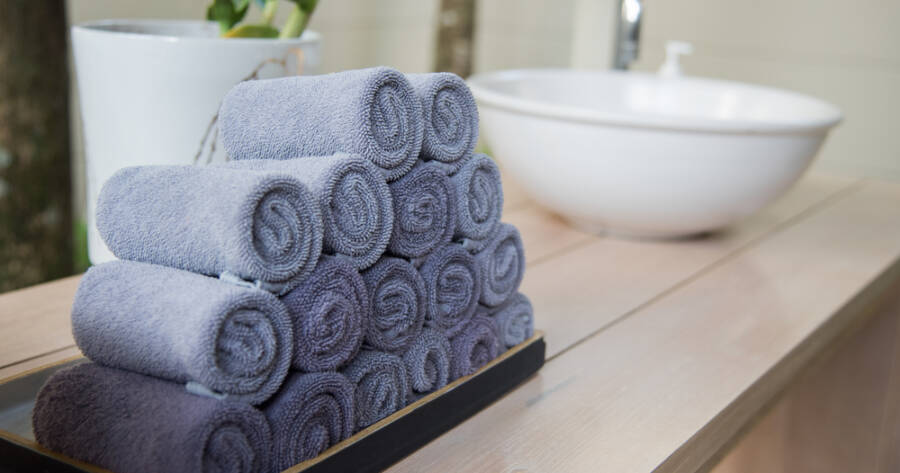
Matching towel sets have long been an easy way to make a bathroom look organized, but a different approach is gaining ground. Instead of buying identical bath towels, hand towels, and washcloths, homeowners are increasingly mixing colors, patterns, and textures. The goal is to create a layered, more personal look in which towels function as part of the decor.
Why Matching Towel Sets Are Giving Way to a Mixed Look
The traditional towel set prioritizes uniformity: one color, one texture, and often one design repeated throughout the bathroom. The newer approach treats individual towels more like decorative accessories that can work together without being identical.
This is not simply a theoretical styling idea. Canningvale describes mixing and matching towels as an increasingly popular approach and specifically contrasts it with rigid matching sets. Its guidance recommends combining different towel types while using color, pattern, and texture to keep the overall arrangement cohesive (source).
Recent design coverage points in the same direction. Architectural Digest notes that patterned bath towels are increasingly being used to introduce color, texture, and distinctive design details into bathrooms rather than serving as purely functional linens (source). That makes towels an easy place to experiment with a more collected look.
The New Formula: Coordinate Instead of Match
The key difference is that coordinating does not mean choosing randomly. A successful mix usually has something connecting the pieces.
One simple approach is to stay within the same color family while changing texture. A deep green plush bath towel could be combined with a lighter sage hand towel in a waffle weave. Another option is to keep most towels solid and introduce a stripe, gingham, floral, or other pattern through one smaller piece.
Canningvale recommends choosing a clear color palette first, then experimenting with complementary colors, patterns, and textures. It also suggests layering towels in contrasting colors or finishes to add depth to the room (source). The result should look connected without appearing as though every piece came from the same box.
Patterned Towels Are Becoming Decorative Features
One reason this approach works is that towels themselves have become more visually distinctive.
Architectural Digest highlighted patterned towels in 2026 as bathroom accessories capable of shaping the personality of a space. Its examples include stripes, gingham, florals, and animal prints used to reinforce existing colors or introduce contrast into otherwise restrained bathrooms (source).
Hand towels are receiving similar attention. Another Architectural Digest report noted that designers and brands are increasingly treating hand towels as expressions of personal taste, with greater emphasis on color, craftsmanship, material, and pattern (source).
That creates an alternative to the old assumption that bathroom textiles should disappear into the background. A towel can now repeat the color of a tile, contrast with a painted vanity, or introduce a pattern that would be too expensive or permanent to use elsewhere.
Texture Can Do the Work Even Without Bold Color
Homeowners who prefer restrained bathrooms do not need to introduce several strong colors to use this trend. Mixing texture can create much of the same layered effect.
A bathroom might combine a thick terry bath towel with a lighter waffle hand towel, for example. Architectural Digest’s 2026 towel coverage emphasizes the wide range of finishes now available, including waffle weaves, decorative edges, patterns, and stronger color choices that can affect the overall appearance of the bathroom (source).
A tonal palette also works well. Two or three variations of blue, green, cream, or another restrained color can create visible differences while still maintaining a calm appearance. Even towels from different collections can look intentional when their colors clearly relate to one another.
How to Make Mixed Towels Look Intentional
The easiest way to adopt the trend is to begin with what is already in the bathroom rather than replace every towel at once.
Choose one dominant color from the room, perhaps from the tile, wall color, shower curtain, or vanity. Keep the largest towels relatively simple, then introduce variation through hand towels or washcloths. A patterned hand towel can provide contrast without overwhelming the space.
Repeating at least one color elsewhere also helps. A striped towel containing blue, for example, will feel more integrated if a similar blue appears in the shower curtain, artwork, tile, or accessories.
Layering is another useful technique. Draping a smaller towel over a larger one allows differences in color and texture to appear together rather than as disconnected elements. Canningvale specifically recommends layering towels of different colors, patterns, or textures as a way to give the bathroom greater depth (source).
A Small Change With a Noticeable Design Effect
The appeal of this bathroom trend is that it does not require a renovation. Towels are already visible, frequently used elements, so changing how they relate to one another can alter the character of the room immediately.
The shift away from strict matching sets is therefore less about rejecting coordinated bathrooms and more about redefining coordination. Instead of making every textile identical, the newer approach connects pieces through related colors, complementary patterns, and contrasting textures.
For homeowners who want a bathroom that feels more collected and expressive, mixed towels provide a simple place to start. Matching sets are not disappearing entirely, but the growing emphasis on patterned, textured, and individually chosen towels shows that uniformity is no longer the only route to a polished bathroom.