

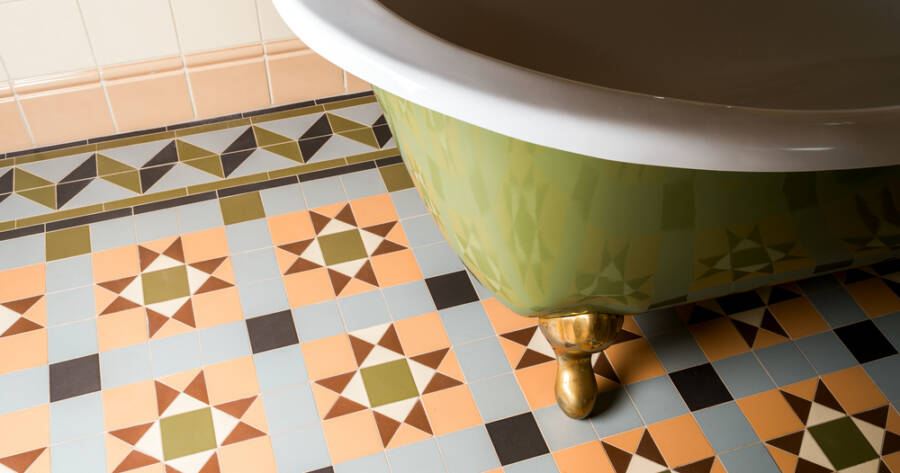
Large decorative rugs have traditionally added warmth and personality to bathrooms, but modern flooring offers alternatives that make such coverings less necessary. Textured tiles, wood-look vinyl, natural stone, and statement patterns can provide visual interest without occupying valuable floor space. For homeowners seeking a cleaner, more cohesive bathroom, modern flooring trends offer practical ways to combine attractive design with moisture resistance and everyday convenience.
Why Statement Flooring Is Replacing Large Bathroom Rugs
Oversized rugs can soften a bathroom’s appearance, but they also cover flooring that could serve as a decorative feature. In smaller bathrooms, large rugs may interrupt the visual flow of the room, while thick fabrics can retain moisture and require frequent cleaning.
An alternative is statement flooring: choosing tiles, planks, or natural materials with enough texture, color, or pattern to become part of the bathroom’s overall design. Instead of using a rug to introduce personality, homeowners allow the floor itself to create visual interest.
This does not eliminate the need for smaller, absorbent bath mats near showers or bathtubs. Rather, it reduces reliance on large decorative rugs that cover substantial portions of the floor.
Textured and Matte Tiles Offer Practical Appeal
Textured tiles are an attractive option for bathrooms because they introduce subtle patterns and surface variations without requiring decorative coverings. Porcelain and ceramic tiles are available in stone-inspired finishes, geometric patterns, and understated neutral colors that complement different interior styles.
Matte and honed finishes have also gained attention as alternatives to glossy flooring. Their less reflective surfaces contribute to a softer appearance, particularly in bathrooms featuring natural materials and minimalist fixtures (source).
Safety remains important when choosing tiles. Homeowners should select products with slip-resistance ratings appropriate for wet bathroom floors rather than assuming that every textured or matte finish provides sufficient traction.
Wood-Look Vinyl Brings Warmth Without a Rug
One reason homeowners use bathroom rugs is to soften the appearance of hard, cold surfaces. Wood-look flooring offers another way to introduce warmth through natural-looking colors and grain patterns.
Waterproof vinyl planks have become a prominent bathroom flooring option. Products with wood-plastic composite (WPC) and stone-plastic composite (SPC) cores can reproduce the appearance of hardwood while offering greater moisture resistance than conventional wood flooring (source).
Light oak tones can brighten compact bathrooms, while deeper walnut-inspired finishes provide contrast against white fixtures. Homeowners should still follow installation instructions carefully, since water reaching beneath the flooring can create problems even when the planks themselves are waterproof.
Natural Stone Creates a Spa-Inspired Atmosphere
Natural materials are another important direction in bathroom design. Limestone, slate, and terracotta introduce organic colors and textures that make large decorative rugs less necessary.
Spa-inspired bathrooms increasingly emphasize earthy finishes and coordinated materials. Rather than relying on multiple decorative accessories, these spaces combine natural flooring with wood vanities, muted wall colors, and simple fixtures to create a cohesive environment (source).
Stone flooring requires careful selection because maintenance needs vary by material. Some natural stones need sealing, while others may be sensitive to acidic cleaning products. Buyers should also check surface texture and suitability for wet areas before installation.
Marble-Look Porcelain Offers a Refined Alternative
For homeowners drawn to luxurious interiors, marble-look porcelain provides another way to make bathroom flooring a decorative centerpiece. Modern manufacturing techniques allow ceramic and porcelain tiles to imitate the distinctive veining and color variations associated with natural marble.
These products can offer a less expensive alternative to genuine marble, depending on the materials selected. They also generally require less specialized maintenance, although grout and tile surfaces still need regular cleaning (source).
Large-format marble-look tiles are particularly effective in contemporary bathrooms. Their broad surfaces and relatively limited grout lines can create a continuous appearance, reducing the need for a decorative rug to tie the room together.
Patterned Tiles Replace the Decorative Role of Rugs
Large bathroom rugs traditionally introduce color, pattern, and contrast. Patterned floor tiles can perform the same decorative function while becoming a permanent part of the room.
Herringbone and chevron arrangements, geometric mosaics, and patterned ceramic tiles offer opportunities to create distinctive flooring. A patterned section beneath a freestanding bathtub or near a vanity can also establish a visual focal point without covering the floor with fabric (source).
For smaller bathrooms, restrained patterns can add character without making the space feel crowded. Homeowners seeking a more expressive design can consider contrasting colors or decorative tile borders.
Dark Flooring Supports the Boutique Hotel Look
Bathrooms inspired by boutique hotels often incorporate deeper colors, dramatic contrasts, and layered natural materials. Charcoal tiles, dark slate, and richly colored stone-look finishes can help establish this atmosphere.
Rather than using a decorative rug to anchor the room, dark flooring provides a visual foundation for lighter walls, metal fixtures, and natural wood furnishings. Contemporary bathroom design has increasingly explored these moody interiors alongside warmer spa-inspired spaces (source).
Practical considerations remain important. Dark surfaces may reveal water spots or mineral deposits, making suitable finishes and regular cleaning essential.
Choosing Bathroom Flooring Beyond Traditional Rugs
Modern bathroom flooring offers numerous ways to achieve the warmth, texture, and visual interest traditionally supplied by oversized rugs. Textured porcelain, wood-look vinyl, natural stone, marble-inspired finishes, and patterned tiles can each become defining features of the room.
The most suitable choice depends on moisture exposure, maintenance requirements, accessibility, and personal style. Homeowners should prioritize materials designed for bathroom use and retain functional bath mats where necessary. Thoughtful flooring selection can create a more cohesive, attractive space without depending on large decorative rugs to complete the design.