

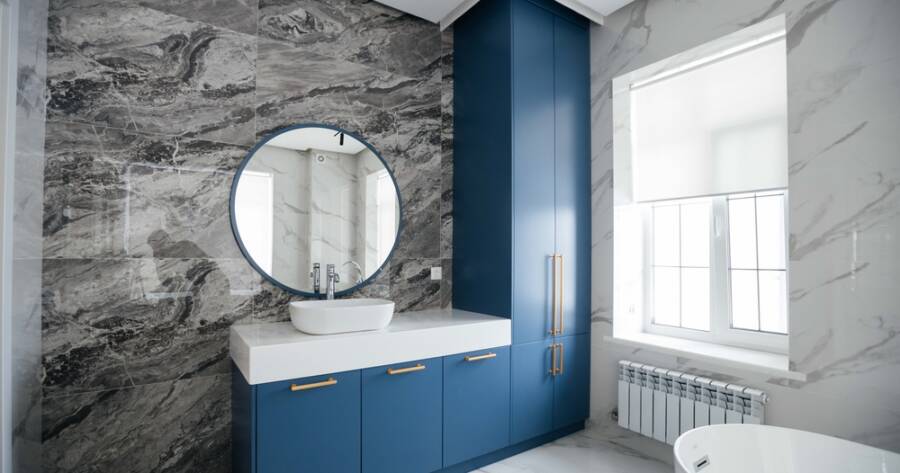
Open shelving once seemed like an easy way to make bathrooms feel airy and accessible, but exposed storage can quickly turn everyday toiletries into visual clutter. Newer bathroom designs are moving toward storage that keeps essentials close without putting everything on display. Recessed cabinets, storage-focused vanities, built-in niches, and vertical cabinetry are increasingly filling that role.
Why Open Bathroom Shelves Are Losing Their Appeal
Open shelves work best when their contents are carefully edited, but real bathrooms rarely stay that way. Towels, skincare products, hair tools, medicine, cleaning supplies, and spare toiletries all compete for space. Once shelves become crowded, the light and minimal look they were meant to create can disappear.
That helps explain why concealed storage fits so naturally with current bathroom design. Planning guidance increasingly emphasizes deciding where towels, toiletries, medicines, cleaning products, and styling tools will live before a renovation begins, with vanity units, mirrored cabinets, tall cabinets, and recessed niches among the practical options (source). Instead of styling everyday possessions as decor, homeowners can give them dedicated places out of sight.
Recessed Medicine Cabinets Are Back
One of the clearest alternatives to open shelving is the medicine cabinet. Far from the bulky versions associated with older bathrooms, contemporary models are being treated as design features in their own right. Recessed construction allows the cabinet to sit within the wall while providing storage directly above the sink, making it especially useful where counter and wall space are limited (source).
Modern versions also offer considerably more visual variety. Thin frames, concealed hinges, streamlined profiles, colorful trim, and shapes influenced by earlier design eras have helped transform the medicine cabinet from a purely practical fixture into something capable of anchoring a vanity area (source). For homeowners removing open shelves near the sink, a mirrored cabinet can provide storage without requiring another visible furniture piece.
Vanities Are Taking On More of the Storage Work
Another major shift is happening below the sink. Instead of treating the vanity primarily as a decorative base for the basin, homeowners can use it as the bathroom’s primary storage center. Cabinets and drawers beneath the sink can hold toiletries, grooming tools, cleaning products, extra toilet paper, and other items that would otherwise migrate onto exposed shelves.
Storage planning guidance specifically identifies vanities with drawers or doors as a core bathroom-storage option and recommends integrating storage into the room from the beginning rather than adding it after the renovation is finished (source). Drawers can be especially helpful for smaller everyday items because they allow users to see contents from above instead of reaching behind products stacked at the front of a deep cabinet.
This approach also lets the rest of the bathroom remain visually quieter. A vanity with adequate internal storage can eliminate the need for several small shelves around the mirror or toilet, concentrating practical items in one organized zone.
Built-In Shower Niches Replace Exposed Shower Shelves
Open storage is disappearing inside showers as well. Rather than attaching shelving, balancing bottles on corners, or relying on hanging caddies, many renovated bathrooms now incorporate recessed niches directly into the shower wall.
A built-in niche creates a flush storage area for shampoo, conditioner, soap, and other daily products without projecting into the shower space. Because the recess is formed within the wall, it maintains a cleaner surface while keeping products within easy reach. Current bathroom-planning guidance specifically recommends recessed niches as a way to provide shower storage without the clutter created by shelves and caddies (source).
The important limitation is timing. A recessed niche generally needs to be planned before wall construction and tiling are completed, so it is far easier to incorporate during a renovation than afterward. Homeowners planning a new shower should therefore decide early where products will be stored rather than treating storage as a finishing detail.
Tall Cabinets Make Better Use of Vertical Space
Bathrooms with limited floor area can also replace several scattered open shelves with one narrow vertical cabinet. A tall storage unit uses height rather than width, giving towels, backup toiletries, and cleaning products a dedicated home without consuming much floor space.
Tall cabinets are specifically recommended as an efficient option for narrow bathrooms, alongside mirrored cabinets, vanity storage, and wall-hung cabinetry (source). Wall-mounted cabinets can provide a similar benefit while keeping the floor visible, which can help a compact bathroom feel less crowded.
The advantage is not simply hiding possessions. Consolidating storage makes it easier to decide what belongs where and reduces the temptation to cover every available wall with small shelves.
A More Intentional Approach to Bathroom Storage
The trends replacing open shelves are less about eliminating storage than making it part of the architecture. Recessed medicine cabinets use otherwise unused wall depth, vanities turn the sink area into a storage hub, shower niches integrate product storage into tiled walls, and tall cabinets take advantage of vertical space.
For homeowners updating a bathroom, the best replacement depends on what the shelves currently hold. Everyday sink products may belong in a medicine cabinet, towels and cleaning supplies can move into vanity or tall cabinetry, and shower products can be assigned a recessed niche. By matching each type of storage to what actually needs to be stored, homeowners can achieve the cleaner look associated with modern bathrooms without sacrificing convenience.