

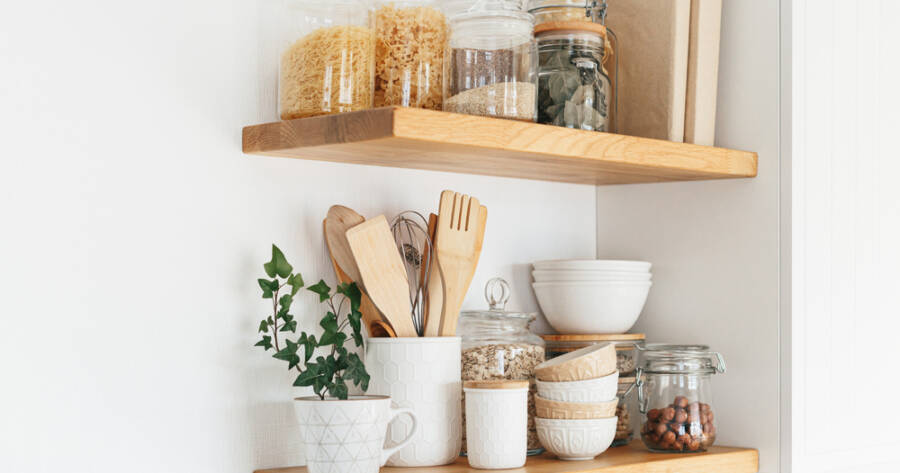
Upper cabinets have been a kitchen standard for generations, but designers are beginning to treat wall space very differently. Storage still matters, yet openness, personality, and visual balance are playing a much bigger role in how modern kitchens are planned. The result is a growing range of creative ideas that challenge the familiar wall of cabinets above the countertop.
Why Designers Are Moving Away From Traditional Upper Cabinets
For decades, upper kitchen cabinets were considered a practical necessity, stacking storage high along the walls to maximize every inch of available space. Today, however, many designers are questioning whether that trade-off is actually worth it. The visual weight that rows of closed upper cabinetry adds to a kitchen can work against the room’s overall feel, closing in the space and reducing the sense of openness that modern homeowners tend to prefer.
Designer Stephanie Mahaney has been vocal about this shift, noting that upper cabinets “can feel very clunky and can make the below countertop space feel messy because of the shadow it creates,” prompting her to seek alternatives in recent projects (source). That kind of thinking is becoming more common across the design world, as kitchens evolve from purely functional cooking spaces into rooms that serve a broader social and aesthetic purpose.
Designer Hillary Cohen also captures this shift well, explaining that kitchens are increasingly being designed to “not look so ‘kitcheny’,” with the space treated almost as an extension of the living room where aesthetics take clear priority (source). That perspective is driving a wave of creative alternatives to the traditional upper cabinet lineup.
Popular Alternatives to Upper Kitchen Cabinets
One of the most widely adopted replacements for upper cabinets is open shelving. Rather than hiding dishware and serving pieces behind closed doors, open shelves put those items on display, turning everyday objects into part of the kitchen’s visual story. Canadian designer Stephanie Martin advocates for displaying collections of serveware above the counter, arguing that it “feels immensely more elevated and personal than monotonous upper cabinetry” (source). Artwork is another option she recommends for that wall space, giving the kitchen a gallery-like quality that traditional cabinetry simply cannot achieve.
Floor-to-ceiling cabinetry is also gaining ground as a practical alternative. Rather than lining every wall with mid-height cabinets, designers are concentrating storage into tall pantry-style units that keep clutter contained and out of sight (source). Push-to-open hardware on these tall cabinets removes visible handles entirely, contributing to the clean, streamlined appearance that so many kitchen renovations are chasing right now.
Another trend gaining traction involves extending countertop materials up the wall as a backsplash. Using the same quartzite, marble, or stone from the countertop surface vertically behind it creates a cohesive, unified look that fills the wall space without adding visual clutter (source). This approach is widely regarded as a timeless choice that sidesteps the dated look that rows of upper cabinets can sometimes project.
When Upper Cabinets Do Stay, They Are Getting a Makeover
Not every designer is ready to eliminate upper cabinets entirely, and some argue that a full removal is not always the right answer. Designer Brianna Scott predicts that upper cabinets won’t disappear entirely but is clear that “the style and placement of them are changing,” with a mix of open and closed storage offering a functional yet visually open result (source). That hybrid approach lets homeowners keep the storage they need while avoiding the boxed-in feeling that solid rows of upper cabinetry can produce.
Statement lighting is also changing the character of the space above and around cabinets. Designer Laura Williams notes that homeowners are “starting to lose the desire for an understated kitchen,” with large, bold light fixtures described as defining the look of modern kitchen spaces (source). Oversized pendants and dramatic overhead fixtures draw the eye upward in a way that upper cabinets never could, adding personality and depth to the room.
Material mixing is another direction reshaping how cabinetry is used throughout the kitchen. Combining tall wood-tone cabinet towers with painted lower cabinets, for example, creates visual contrast and a layered, intentional look rather than a wall of matching doors (source). This kind of thoughtful pairing reflects the broader move toward kitchens that feel designed rather than simply equipped.
Balancing Practicality and Style in the Modern Kitchen
For homeowners weighing a kitchen renovation, the question of upper cabinets now involves far more options than it once did. The choice is no longer simply whether to have them or not. It is about deciding how storage, display, lighting, and materials can work together to create a kitchen that functions well and feels genuinely inviting. Designers across the country are proving that the walls above the countertop can do much more than hold dishes behind closed doors — and the results speak for themselves.
Why You Should Learn More About Kitchen Cabinet Design Today
The shift happening in kitchen cabinet design is not a passing fad. Professional designers are fundamentally rethinking how kitchens use vertical space, moving toward solutions that balance storage needs with aesthetic goals.
Whether a homeowner is planning a full renovation or simply refreshing an existing space, understanding what designers are prioritizing above the counter can lead to smarter, more satisfying choices. Open shelving, floor-to-ceiling pantries, statement lighting, and mixed materials are all reshaping what a modern American kitchen looks and feels like, and staying informed about these directions helps homeowners make decisions they will be happy with for years to come.