

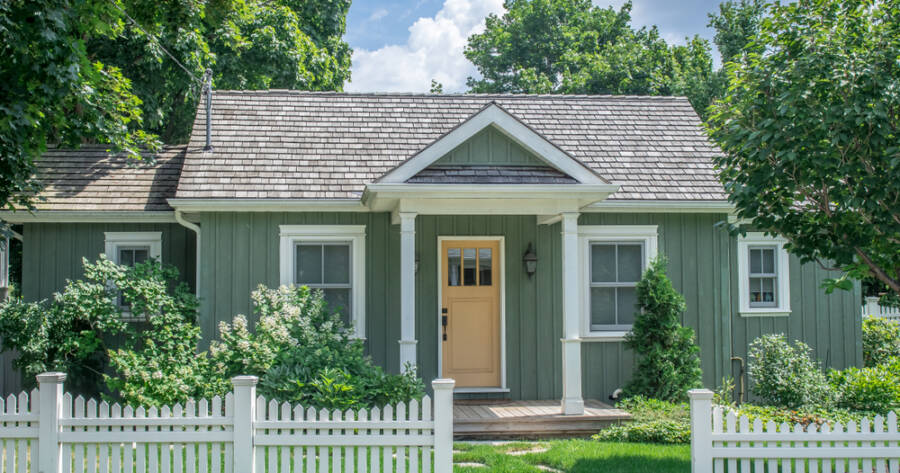
Residential fences have evolved from practical barriers into defining features of American homes. What began as a way to mark property lines, protect crops, and contain livestock gradually became an opportunity to display architectural style and create private outdoor spaces. From colonial wooden rails to contemporary composite panels, each generation has introduced new materials, designs, and expectations for residential fencing.
Early American Fences: Practicality Meets Appearance
In colonial America, fences were essential for separating private property, protecting cultivated land, and controlling livestock. Some communities even required landowners to maintain enclosures. The materials used depended largely on local resources. Wooden post-and-rail fences were common in wooded regions, while stone walls appeared where rocks were plentiful. Zigzagging split-rail designs offered a practical solution because they could stand without posts buried in the ground (source).
As settlements expanded, residential fencing gradually acquired decorative significance. Homeowners sometimes installed carefully finished picket fences near their houses while reserving simpler barriers for fields and pastures. Painted gates, ornamental details, and orderly fence lines helped create a more polished appearance. Fencing was becoming a way to express personal taste and social standing, not merely establish boundaries.
The Nineteenth Century: Decorative Iron Fencing Expands
Industrial development transformed residential fencing during the nineteenth century. Earlier decorative iron barriers were expensive and primarily associated with wealthy estates or important institutions. Improvements in American iron manufacturing made ornamental metalwork more accessible, allowing homeowners to choose designs featuring curved details, decorative finials, and intricate patterns. More than 100 fencing patents were registered between 1801 and 1857, reflecting considerable experimentation with construction methods and styles (source).
Iron fencing also introduced a different relationship between visibility and enclosure. Unlike solid wooden barriers, open metal designs could define a property without concealing its architecture or landscaping. This made them particularly suitable for formal front yards and urban residences. Decorative ironwork established a design tradition that continues to influence contemporary metal fences.
The Twentieth Century: Chain-Link Fences and Suburban Growth
During the twentieth century, American residential fencing increasingly reflected the needs of expanding suburban neighborhoods. Homeowners wanted practical boundaries that were relatively economical and straightforward to maintain. Chain-link fencing became especially popular during the postwar suburban expansion of the 1950s. Its woven metal construction provided a durable enclosure while preserving visibility between neighboring properties (source).
Traditional wooden picket fences remained culturally significant, even as some homeowners replaced them with metal alternatives. Their association with suburban family life persisted through television, advertising, and neighborhood design. By the 1980s, renewed interest in traditional neighborhood architecture helped revive the picket fence’s popularity. Residential fencing now offered contrasting approaches: open metal barriers for practicality, decorative pickets for street appeal, and taller wooden panels for greater seclusion.
Vinyl Fencing Introduces Lower-Maintenance Choices
Another major change arrived as manufacturers developed fencing made from polyvinyl chloride, commonly called PVC or vinyl. The industry began expanding during the early 1980s, offering alternatives to wood that did not require regular painting. Early products sometimes suffered from sunlight-related deterioration, prompting manufacturers to improve their formulations with protective additives and stronger construction methods (source).
Vinyl fencing eventually offered homeowners familiar designs without relying on traditional timber. White picket styles, solid privacy panels, and decorative rail fences became available in manufactured sections. The material appealed particularly to people seeking consistent appearance and reduced routine upkeep. However, product quality, installation requirements, and exposure to weather remained important considerations when choosing between vinyl and wood.
Modern Wood Fences: From Vertical Pickets to Horizontal Boards
Wood has remained an important residential fencing material despite competition from manufactured alternatives. Cedar, for example, can be cut and arranged into numerous styles, making it suitable for both traditional and contemporary properties. Modern homeowners increasingly use wood to create clean geometric designs rather than relying exclusively on closely spaced vertical pickets.
Horizontal boards are particularly associated with contemporary outdoor design. Their long, uninterrupted lines can make a garden appear visually wider while complementing modern architecture. Designers also experiment with board spacing, contrasting stains, and combinations of timber with metal supports. These approaches demonstrate how a familiar material can acquire an entirely different appearance through changes in orientation and detailing (source).
Privacy Fences Become Part of Outdoor Living
Modern residential fencing increasingly emphasizes how outdoor spaces feel and function. Instead of simply enclosing an entire yard, homeowners may install privacy screens around patios, seating areas, outdoor kitchens, or swimming pools. Solid panels create separation from neighboring properties, while partially open designs maintain airflow and filtered views. Landscaping can further soften the appearance of these structures.
Contemporary privacy fencing also draws from a broader selection of materials, including wood, vinyl, metal, and composites. Some designs combine contrasting surfaces or incorporate decorative screens to create visual interest. Color, height, and placement are now considered alongside durability and maintenance. A carefully positioned fence can define an outdoor living area without making the surrounding garden feel unnecessarily enclosed.
How Fencing Design Continues to Change
Current residential fence design increasingly involves balancing appearance, privacy, durability, and long-term maintenance. Traditional styles remain available, but homeowners can also choose streamlined panels, mixed-material structures, and customized layouts. The growing selection allows fencing to complement architectural details, landscaping, and the intended use of an outdoor space.
Selecting a fence therefore involves more than choosing an attractive pattern. Homeowners should consider local height restrictions, property boundaries, exposure to weather, and the maintenance requirements of different materials. A design that suits a secluded backyard may not be appropriate for a front garden where openness and neighborhood character matter more.
From Simple Boundaries to Thoughtful Design
The history of residential fencing reflects changing priorities in American homeownership. Early settlers emphasized property protection and agricultural needs, nineteenth-century homeowners embraced ornamental metalwork, and suburban expansion encouraged practical manufactured barriers. Newer materials and contemporary layouts have further expanded the possibilities.
Today’s homeowners can draw inspiration from every stage of that history. Whether selecting a classic wooden picket fence, a traditional iron enclosure, or a modern privacy screen, understanding how fence designs evolved makes it easier to choose an option that complements the home while meeting everyday needs.