

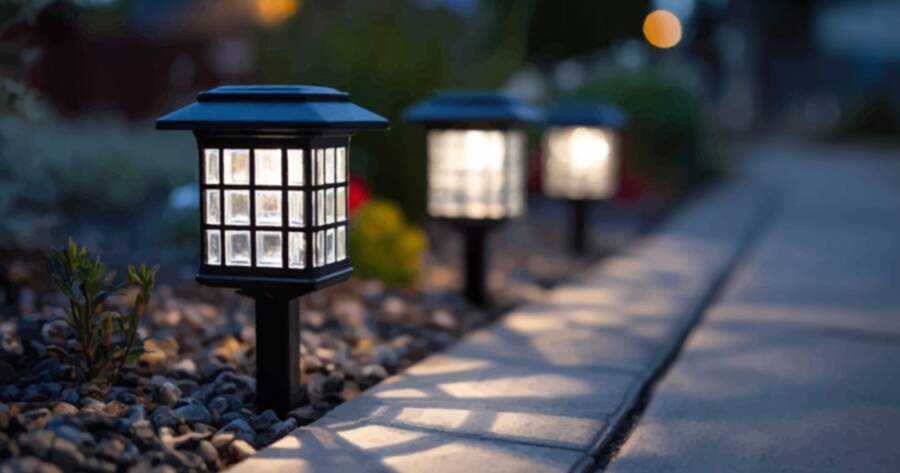
Driveway lighting in 2026 is about more than simply illuminating the way home. Homeowners are exploring low-voltage LED systems, discreet fixtures, smart controls, and durable materials that combine practicality with modern design. From subtle pathway accents to customizable lighting zones, several evolving trends offer new ways to improve visibility, enhance curb appeal, and create welcoming outdoor spaces.
Why Solar Stakes Are Falling Out of Favor
For years, solar pathway and driveway lights seemed like the obvious choice — no wiring, no electricity costs, and easy installation. But the reality of living with solar lighting has pushed many homeowners to reconsider. Solar fixtures depend entirely on sunlight to charge their batteries, which means extended overcast periods or a shaded driveway can leave the property without reliable illumination (source). In northern states or heavily wooded lots, this limitation becomes a recurring problem rather than an occasional inconvenience.
Battery degradation compounds the issue. Even in ideal climates, the batteries inside solar lighting units tend to degrade over time, and most fixtures have a functional lifespan of only one to three years before performance drops noticeably (source). Homeowners who have replaced multiple sets of solar stakes in a single decade are often surprised to learn that a wired alternative would have cost less over that same period.
Low-Voltage LED Systems as the Modern Standard
The professional lighting industry has largely settled on low-voltage LED systems as the preferred solution for driveways, pathways, and landscape borders. These systems connect directly to a home’s power supply, delivering consistent output every night regardless of weather or season (source). The result is predictable, dependable lighting that homeowners can count on year-round.
From an energy standpoint, modern LED technology has made low-voltage systems remarkably efficient. LED systems can consume dramatically less energy than older incandescent bulbs while lasting far longer, making them a practical long-term investment for any household (source). When paired with quality brass or aluminum fixtures, these systems can remain functional and attractive for ten to fifteen years — a lifespan that far outpaces anything available in the solar category (source).
Design Is Taking Center Stage in 2026
Beyond the technical advantages, a major shift is happening in how homeowners think about driveway lighting aesthetically. The dominant design philosophy entering 2026 prioritizes the effect of light over the visibility of the fixture itself. Professionals describe this approach as wanting homeowners to notice glowing paths and textured surfaces rather than the hardware producing that effect, achieved through low-profile path lights and discreet uplighting placements (source).
Material choices are also becoming more intentional. Brass, bronze, basalt, and CorTen steel are among the materials gaining traction for fixtures that are meant to age gracefully and complement natural landscaping rather than stand out as manufactured elements (source). These material-forward designs align with a broader trend in residential architecture toward finishes that develop character over time.
Custom touches are entering the driveway lighting space as well. Address markers, personalized path markers, and micro-custom fixture designs are increasingly popular among homeowners who want their outdoor lighting to feel curated rather than off-the-shelf (source). This move toward personalization reflects how driveway lighting has evolved from a purely functional feature into a genuine design element.
Smart Controls and Integrated Technology
Technology integration is another defining characteristic of where driveway lighting is headed. The industry has seen rapid adoption of WiFi-connected transformer systems and app-based controls, which allow homeowners to manage individual lighting zones, fine-tune brightness levels, and program scenes from a smartphone (source). What was once a feature reserved for high-end custom builds is becoming a standard expectation for new installations.
LED-integrated fixtures are part of this same technological shift. Unlike traditional socket-and-bulb designs, integrated LED systems are sealed units that deliver improved durability and longer operational life (source). Because there is no replaceable bulb to fail or corrode, these fixtures require less maintenance and perform more consistently across changing weather conditions — a significant advantage for driveways exposed to rain, snow, and seasonal temperature swings.
Low-voltage systems also offer considerably more design flexibility than their solar counterparts. Homeowners can incorporate sleek path lights, hardscape accents that highlight stone walls or paved borders, and deck lighting into a single unified system — all controlled through one interface and powered reliably through a single connection point (source). This kind of layered, coordinated approach simply is not achievable with standalone solar fixtures.
Why You Should Learn More About Driveway Lighting
Driveway lighting in 2026 is no longer just about visibility after dark — it is about creating an intentional first impression that balances energy efficiency, long-term durability, and refined design. The shift away from solar stakes toward low-voltage LED systems reflects a broader recognition that reliable performance and design quality matter more than the simplicity of installation.
With smart controls, material-forward fixtures, and seamless integration into home automation systems now widely available, homeowners have more options than ever to transform a driveway into a polished, well-lit arrival experience. Exploring the full range of modern driveway lighting solutions can help any property owner make a confident, informed decision about upgrading their outdoor space.