

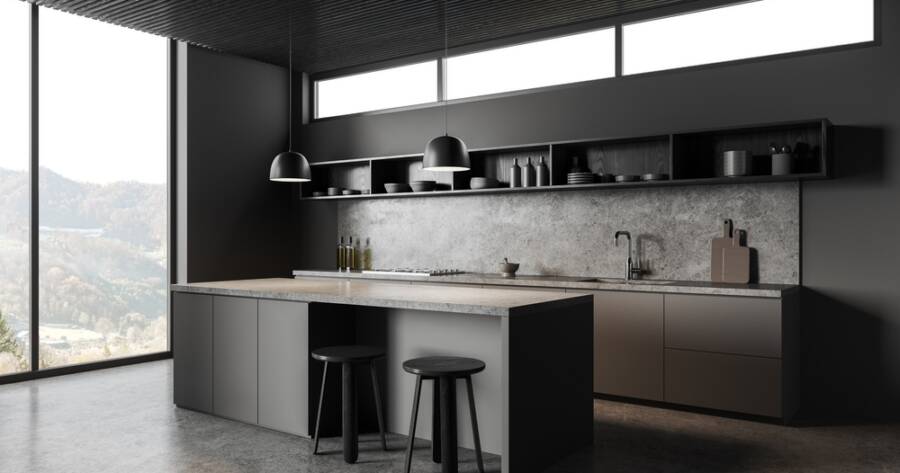
Wicker baskets have long been a familiar sight above kitchen cabinets, but homeowners now have plenty of alternatives for decorating an often-overlooked space. From sculptural ceramics and framed artwork to greenery and minimalist designs, fresh approaches can add personality without creating clutter. Understanding top options reveals how thoughtful styling choices can transform the space above kitchen cabinets.
Why Baskets Above Cabinets Are Falling Out of Style
For years, woven baskets stacked above kitchen cabinets served as a go-to decorating solution. They were easy to find, inexpensive, and filled an awkward gap between cabinetry and ceiling without much thought. But as kitchen design has matured, so has the standard for what belongs in that space.
One of the most practical reasons baskets are losing favor is maintenance. Aerosolized cooking oils travel upward during everyday meal preparation, and items resting above cabinets accumulate a stubborn, greasy film that is notoriously difficult to remove (source). Woven materials trap that residue in every fiber, making them a cleaning challenge that many homeowners are no longer willing to accept.
Beyond the cleaning issue, the broader aesthetic of modern kitchen design has shifted toward cleaner, less cluttered environments. Industry professionals now emphasize minimalist layouts featuring floor-to-ceiling cabinetry, push-to-open hardware, and surfaces that are easy to maintain (source). Bulky, rustic baskets simply do not align with that sensibility.
The Rise of Sculptural and Collected Objects
One of the strongest replacement trends involves displaying collections of ceramics, vases, or decorative vessels in a deliberate, repeated arrangement. The visual power of repetition transforms an above-cabinet display from an afterthought into an intentional design moment (source). A row of identically toned stoneware pitchers or a curated grouping of sculptural pottery creates cohesion and draws the eye upward in a way that feels purposeful rather than accumulated.
Plates, whether vintage, handmade, or simply chosen for their color palette, are another strong option. Leaning them along the top of cabinetry adds height and personality while maintaining a sense of artistry. Unlike baskets, these objects can be chosen to complement the overall palette and material story of the kitchen.
Plants as Living Decor Elements
Greenery above kitchen cabinets is gaining serious momentum, and for good reason. A trailing plant or a low-maintenance succulent positioned above cabinetry can make the entire room feel brighter and more alive (source). This approach also connects the kitchen to the broader design movement of blending natural elements into interior spaces, a direction that the American Society of Interior Designers identifies as a defining characteristic of forward-thinking home design (source).
The key is choosing plants that tolerate low-light and dry conditions, since the top of cabinetry rarely offers ideal growing circumstances. Succulents, air plants, and trailing pothos varieties tend to perform well in those environments without demanding constant attention.
Artwork and Architectural Statements
Leaning framed artwork or prints against the wall above cabinets is a more unexpected approach that is resonating with design-forward homeowners. A single large-format piece or a small grouping of related prints can anchor the space with far more visual weight than a basket arrangement ever could. The proportions work especially well in kitchens with higher ceilings, where the gap above the cabinets is tall enough to accommodate meaningful artwork.
Some homeowners are going even further by extending the architectural material of the kitchen itself upward. Bringing a stone or marble backsplash material up the wall into the above-cabinet zone, for example, creates a seamless and elevated look. Interior designers note that extending countertop materials like quartzite or marble up the wall produces a result that is “timeless and has a clean look” (source).
The Case for Leaving the Space Empty
Perhaps the most surprising trend is the choice to do nothing at all. Floor-to-ceiling cabinetry, which has become one of the most sought-after features in contemporary kitchen design, eliminates the above-cabinet space entirely by extending storage all the way to the ceiling (source). For homeowners who are renovating rather than just redecorating, this option removes the dilemma completely while adding functional storage and a sleek, built-in appearance.
Even in kitchens where full cabinet extensions are not possible, leaving the space deliberately bare can read as intentional restraint rather than neglect. A single object placed with care, or nothing at all against a beautifully tiled wall, often communicates more design confidence than an overcrowded shelf of accessories.
Putting It All Together
The shift away from baskets reflects a larger conversation happening in kitchen design right now. Homeowners want spaces that feel considered rather than filled, personal rather than generic. Whether the above-cabinet zone becomes home to a curated ceramic collection, a trailing plant, a piece of art, or simply a beautiful expanse of architectural material, the emphasis is on intentionality.
The objects chosen for that elevated space should belong there because they contribute something meaningful to the room, not simply because they take up space. Selecting with purpose and editing ruthlessly is the hallmark of the design direction that is replacing the wicker basket era for good.
Why You Should Learn More About Modern Kitchen Design
Kitchen design is moving quickly, and the details that once seemed minor, like what sits above the cabinets, now carry real weight in how a space feels overall. Staying informed about current trends helps homeowners make choices that feel fresh and intentional rather than dated.
From living plants and sculptural ceramics to full floor-to-ceiling cabinetry, the options available today offer far more personality and practicality than the basket arrangements of the past. Exploring these directions empowers homeowners to see that often-overlooked zone above the cabinets not as a problem to solve with a quick fix, but as a genuine design opportunity.