

Some small dog breeds have appearances so unusual that they almost seem imaginary. From puppies with extra toes to miniature companions with elaborate coats, many remarkable dogs stand apart from more familiar breeds. Whether developed for hunting, companionship, or aristocratic households, several uncommon breeds combine distinctive physical features with fascinating histories and personalities.
1. Norwegian Lundehund: The Six-Toed Wonder
The Norwegian Lundehund is a small, athletic breed with one of the most unusual physical adaptations in the canine world. Originally developed along Norway’s rugged coastline, these dogs helped hunters retrieve puffins from narrow crevices along steep cliffs.
Their most remarkable characteristic is their feet. Unlike most dogs, Lundehunds possess six functional toes on each paw, providing additional support when navigating difficult terrain. Their unusually flexible joints and necks also allow movements that would be impossible for many other breeds.
Adult Lundehunds typically weigh between 12 and 18 pounds, making them small but not quite toy-sized. Their pointed ears, foxlike faces, and alert expressions give puppies an especially distinctive appearance (source).
Despite their charming looks, Lundehunds are energetic and independent. Prospective owners should also research breed-specific digestive health concerns before considering one as a companion.
2. Biewer Terrier: A Miniature Dog With a Flowing Coat
The Biewer Terrier resembles a tiny, elaborately dressed show dog. Developed in Germany during the 1980s, this uncommon toy breed originated from Yorkshire Terrier breeding lines and became recognized for its distinctive three-colored coat.
Adult Biewer Terriers typically weigh just 4 to 8 pounds (source). Their long, silky hair features combinations of white, black or blue, and tan or gold. When carefully groomed, the coat can extend toward the ground, creating a striking appearance on such a petite animal.
Their personalities are equally appealing. Biewer Terriers are generally affectionate, playful, and enthusiastic about spending time with their families. They enjoy interactive games and regular walks despite their small stature.
However, their elegant appearance requires maintenance. Daily brushing may be necessary to prevent tangles, particularly when owners choose to maintain the breed’s traditional long hairstyle.
3. Russian Toy: A Delicate Dog With Oversized Ears
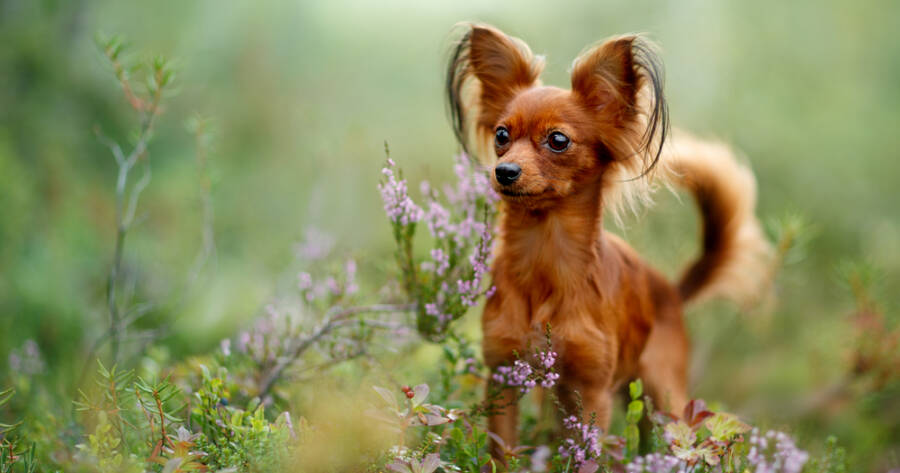
The Russian Toy is among the smallest recognized dog breeds, with adults weighing no more than approximately 6.5 pounds. Its fine-boned body, slender legs, and exceptionally large ears create an almost animated appearance.
Originally associated with Russian aristocratic households, the breed developed into a devoted companion with an energetic personality. Russian Toys come in two coat varieties: smooth-haired and long-haired. The latter is especially distinctive because of the flowing feathering that develops around its ears, legs, and tail.
Despite their delicate appearance, Russian Toys are lively, intelligent, and eager to engage with their owners. They generally enjoy playing, learning tricks, and exploring their surroundings (source). Their small size requires thoughtful handling, especially around young children or larger animals. Regular dental care is also important because toy breeds can experience dental problems as they mature.
4. Bolognese: The Little White Cloud
The Bolognese is a rare Italian companion breed whose fluffy white coat makes it resemble a miniature cloud. Closely associated with Italy’s historic noble households, this charming dog has been valued for companionship for centuries.
Weighing approximately 5.5 to 9 pounds as an adult, the Bolognese is genuinely small (source). Its soft, cotton-like hair grows in loose, fluffy formations, creating a rounded appearance that becomes particularly noticeable around the face and body.
Unlike some highly energetic toy breeds, the Bolognese is generally described as calm, affectionate, and devoted to its family. Its temperament can make it appealing to people seeking a relatively relaxed household companion.
However, its coat requires consistent attention. Without appropriate brushing and grooming, the soft hair can develop uncomfortable mats. These dogs also benefit from companionship and should not be chosen simply because their small size makes them easy to accommodate.
5. Chinese Crested: An Almost Otherworldly Appearance
Few miniature breeds are as visually distinctive as the Chinese Crested. Adults generally weigh between 8 and 12 pounds, but their appearance varies dramatically depending on which of the breed’s two coat varieties they possess (source).
The Hairless variety has mostly exposed skin, accompanied by flowing hair on the head, feet, and tail. This combination creates a striking silhouette that can resemble a tiny fantasy creature. The Powderpuff variety, meanwhile, possesses a full, soft coat that gives it an entirely different appearance.
Chinese Cresteds are typically affectionate, lively companions that enjoy close interaction with their families. Their unusual appearance does not mean they are maintenance-free, however. Hairless dogs require appropriate skin protection, while Powderpuffs need regular coat care (source).
Prospective owners should understand these different grooming needs before deciding which variety suits their lifestyle.
Choosing a Rare Small Dog Responsibly
Unusual looks can make these breeds immediately appealing, but appearance should never be the only consideration when selecting a puppy. Even very small dogs require appropriate exercise, veterinary care, training, and socialization.
Rarity can also make responsible breeders more difficult to locate. Prospective owners should investigate inherited health concerns, request appropriate health-screening information, and avoid sellers who emphasize unusual physical characteristics without discussing the dog’s welfare.
Why These Remarkable Small Breeds Deserve Attention
From the Norwegian Lundehund’s extraordinary paws to the Russian Toy’s dramatic ears and the Chinese Crested’s unusual coat, these five breeds demonstrate the remarkable variety found among smaller dogs.
Their distinctive appearances are fascinating, but their temperaments, histories, and care requirements matter just as much. Understanding those characteristics helps prospective owners appreciate these uncommon breeds while making responsible decisions about welcoming one into their homes.