

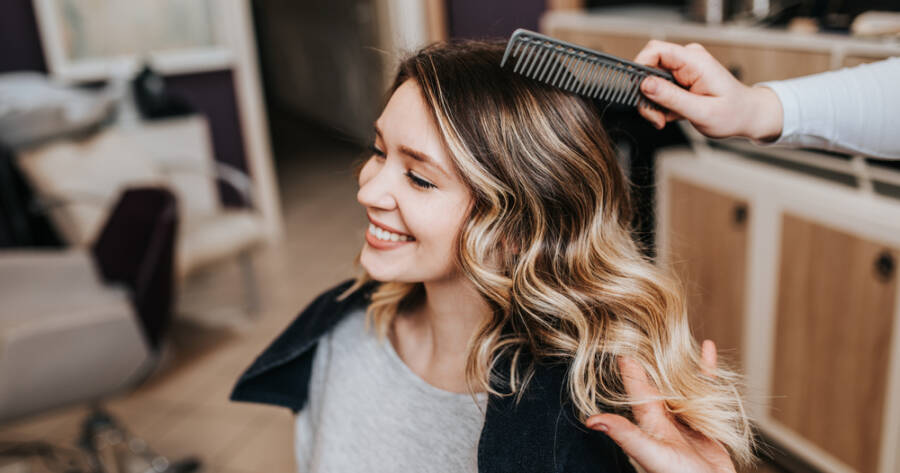
Face-framing balayage is bringing a softer approach to hair color in 2026, pairing strategic brightness around the face with natural-looking dimension throughout the hair. Rather than relying on bold, high-contrast highlights, the trend favors personalized placement, seamless blending, and easier grow-out, making it an appealing option for anyone craving a noticeable but polished refresh.
What Makes Balayage Different From Traditional Highlights
Balayage is a freehand painting technique that creates a natural, customizable gradient along the hair shaft, producing results that look nothing like the uniform, foil-based highlights of decades past (source). Rather than isolating sections of hair and lightening every strand to the same shade, balayage follows the natural way sunlight hits and gradually lifts color, producing a smooth transition from darker roots to lighter ends (source).
This organic approach also means no harsh lines of demarcation as the color grows out. The result is a lived-in look that remains flattering for months between salon visits, making it a practical choice for people who want beautiful color without constant touch-up appointments. Colorists consistently point to balayage’s adaptability as one of its defining strengths, since the placement, depth, and contrast can all be adjusted to suit individual preferences.
The Rise of Face-Framing Balayage in 2026
Among the many variations of balayage, the face-framing approach has emerged as the defining color trend of 2026. Often referred to in the industry as hair contouring, this technique concentrates lighter tones specifically around the hairline and the sections closest to the face, rather than distributing color evenly from root to tip throughout the entire head (source). The effect is a brightening of the overall look that draws attention to facial features without requiring a dramatic full-color transformation.
Vogue described hair contouring as one of the most effortless hair color trends of the year, crediting its ability to make a style feel brighter, fresher, and more elevated with remarkably subtle changes (source). This resonates with a broader cultural shift in hair color preferences, which has moved decisively away from heavy, over-highlighted styles and toward dimensions that look healthy, natural, and seamlessly blended.
Balayage itself has long featured brighter pieces at the hairline, a placement colorists often refer to as the “money piece” (source). Face-framing balayage builds on this idea by making that front-facing brightness the focal point of the entire color story, rather than a secondary detail within a larger look.
Understanding the Different Levels of Face-Framing Color
Not all face-framing balayage looks the same, and the technique actually spans a range of intensities depending on the desired outcome. At the most subtle end sits soft glow contouring, where tones just one or two levels lighter than the base are worked into the face-framing sections, adding warmth and dimension without obvious contrast. Moving up in intensity, classic face contouring introduces a more visible lift while still keeping the color soft and blended. The most dramatic option, bright face framing, brings a striking contrast close to the face that commands attention while remaining more intentional and controlled than older chunky highlight techniques (source).
The right level depends on several factors, including natural base color, skin tone, haircut shape, and how much maintenance a person realistically wants to manage. A colorist’s role in hair contouring goes well beyond simply applying lightener; it involves strategic decisions about placement, tone selection, contrast strength, and how the color will interact with the cut and lifestyle of the individual (source).
Low-Contrast Color and the 2026 Aesthetic
The broader 2026 hair color landscape strongly favors low-maintenance, naturally dimensional results. Low-contrast balayage has become especially popular because it adds subtle dimension without creating a dramatic difference from the natural base color. The softer transition also makes regrowth less noticeable, helping the color maintain a polished appearance with fewer salon visits (source). This approach creates movement and depth without ever looking over-processed or artificially highlighted.
Rich brunettes with glossy finishes and warm, multidimensional blondes dominate the current aesthetic, with shadow roots and diffused bases keeping the grow-out period looking intentional rather than neglected (source). Celebrities including Anne Hathaway and Margot Robbie have helped establish this polished yet understated look as the standard for chic, contemporary hair color (source).
Colorists suggest pairing face-framing balayage with a glossing treatment every six to eight weeks to maintain the tone’s vibrancy and keep the overall look fresh between more significant color appointments (source). This approach extends the life of the color while preserving hair health, which aligns with the wider 2026 emphasis on shine and condition over extreme lightening.
Why Face-Framing Balayage Works for So Many People
One of the most compelling arguments for face-framing balayage is its universality. Because the technique is adjusted based on the individual’s base color, face shape, and desired contrast level, it translates across a remarkably wide range of hair types. Sole Beauty Salon says the overall direction of 2026 color trends favors “softer, more natural dimensions with healthy shine and seamless blending,” and face-framing balayage fits directly into that direction by refreshing the appearance without over-lightening the hair (source).
For those who have been hesitant to try color because of concerns about damage, maintenance costs, or looking overly done, this technique presents an accessible entry point. The commitment level is lower than a full color transformation, the grow-out is forgiving, and the payoff- a brighter, more defined face with dimensional depth- is immediately visible. It is a technique built for real life, not just for the salon chair.
Why You Should Learn More About Face-Framing Balayage Today
Face-framing balayage represents the convergence of artistry, practicality, and modern beauty values. As 2026 solidifies its preference for natural-looking, healthy, low-maintenance hair color, this technique stands out as one of the most effective ways to refresh an appearance without a dramatic commitment.
The ability to customize intensity, from a barely-there soft glow to a bold front-facing brightness, means there is a version of this trend that suits nearly anyone. Understanding the different approaches, the role of gloss treatments, and how face shape and base tone influence placement helps anyone walk into a salon consultation with confidence and clarity about what they want to achieve.