

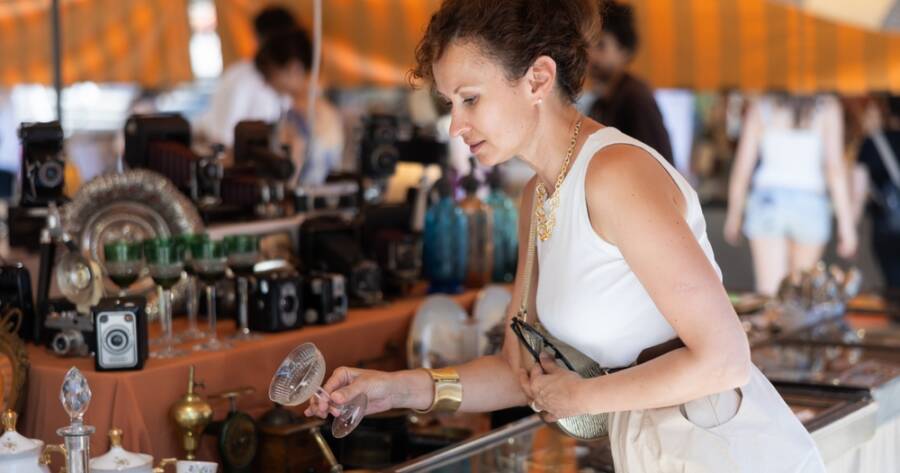
Vintage drinking glasses can turn an ordinary thrift-store shelf into an unexpected collecting opportunity. Decorative gold details, recognizable designer names, distinctive patterns, and well-preserved sets can all attract attention from buyers. For anyone searching estate sales or resale shops, knowing which vintage glassware stands out can make it easier to spot pieces worth a closer look.
Why 1970s Glassware Has Become So Collectible
There is something distinctive about barware produced during the 1970s and the decades immediately surrounding it that separates it from anything manufactured today. According to Jeff Smollar, owner of Retro Solstice, vintage glasses tend to be noticeably heavier, which prevents them from tipping easily, and the gold or silver rim details that decorate these pieces give them a visual presence that modern cocktail glasses simply cannot match (source).
That combination of craftsmanship and visual flair has fueled a collector market where individual pieces and complete sets alike attract buyers willing to pay premium prices. The hunt for authentic vintage barware has expanded well beyond antique shops, with platforms like Etsy, Poshmark, and 1stDibs becoming active marketplaces for mid-century glassware enthusiasts.
Culver Glassware: The Collector’s Entry Point With High Upside
Among the brands that antiques dealers consistently recommend, Culver glassware from the 1960s and 1970s stands out as one of the most approachable starting points for new collectors — yet its most sought-after patterns can still fetch impressive sums (source). The Valencia and Seville designs attract the strongest buyer interest, and holiday-themed pieces featuring Rudolph with a gem-accented nose have developed a devoted following of their own.
Culver Valencia sets in particular have shown remarkable resale strength. Complete lowball sets have been listed on Etsy, while premium mid-century highball sets have appeared on 1stDibs at substantially higher prices, demonstrating that the right set in the right condition can carry real monetary value (source). Even a single Valencia cocktail glass can attract a buyer trying to complete an existing set, with individual pieces selling on platforms like Poshmark (source).
How to Authenticate a Culver Valencia Piece
Because Culver Valencia has become desirable enough to inspire reproductions, collectors need to know how to spot the real thing. The most reliable indicator is a raised emerald green diamond within the Valencia pattern itself — authentic originals feature this diamond, while replicas do not include it. The gold detailing on genuine pieces may also carry a raised texture that is part of the original design (source).
The brand’s labeling system also shifted across different production eras, which gives collectors another authentication tool. During the 1970s, the Culver name appeared in block lettering on the glassware, while earlier pieces from prior decades displayed the name in a curvy script (source). Pieces produced after the 1970s may carry no permanent signature at all, since the company transitioned to foil paper transfer labels that washing could remove entirely (source). Knowing these details helps a collector determine what era a piece belongs to and whether it qualifies as the genuine article.
Georges Briard and Fred Press: The Premium Tier of Vintage Barware
Collectors willing to invest in higher-end vintage barware often set their sights on pieces by Georges Briard and Fred Press, two New York designers whose work defined gilded glassware in the mid-twentieth century. Briard’s career producing ornate, gold-accented pieces stretched from the 1950s through the 1970s, and his work now commands significant prices at auction and through private sales (source). Among his many designs, patterns with names like Pickled Personality, Name Your Poison, and Muddled Wisdom draw the most competitive interest from serious collectors.
Fred Press built his reputation in New York City during the 1950s with glassware embellished using 22 and 24-karat gold. His highball sets rank among his most coveted offerings, and buyers especially seek out his distinctive motifs, which include fish, leaf, and atomic star patterns (source). The atomic star design in particular reflects the mid-century aesthetic that defines this collecting category and makes these pieces feel like genuine artifacts of a specific cultural moment.
Where to Start Hunting for These Pieces
Estate sales remain one of the best environments for finding authentic vintage barware, especially in regions where households accumulated these sets during their original era of popularity. Thrift stores and antique markets can also yield strong finds for a patient collector who knows what to look for. Online resale platforms have made the market more transparent, allowing buyers to compare prices across multiple listings and develop a clearer sense of what a particular pattern or brand is actually worth before committing to a purchase.
Condition matters considerably in this market. Gold detailing on vintage glassware can wear with age or dishwasher use, so pieces with intact, vivid metalwork consistently command better prices than those showing significant wear. Sets that include all original pieces and have been kept in clean, protected storage tend to attract the most competitive bidding.
Why You Should Learn More About 1970s Vintage Drinking Glasses
The market for 1970s vintage drinking glasses rewards collectors who invest time in understanding which brands, patterns, and authentication details separate valuable pieces from ordinary glassware. Brands like Culver, Georges Briard, and Fred Press represent a category where design history, material quality, and collector demand intersect.
Whether a collector is just starting out with an accessible Culver piece or pursuing a complete Georges Briard set, the knowledge behind each purchase matters as much as the piece itself. Understanding production eras, signature styles, and pattern authentication transforms casual thrift store browsing into a genuinely rewarding pursuit with real financial upside for those who develop expertise in this fascinating corner of American decorative history.